Podcasts
Episode 2: Nuclear Verdicts and Where the Settlement Dollars Really Go with Brian Falchuk

The Future of Claims — Episode 2: Brian Falchuk
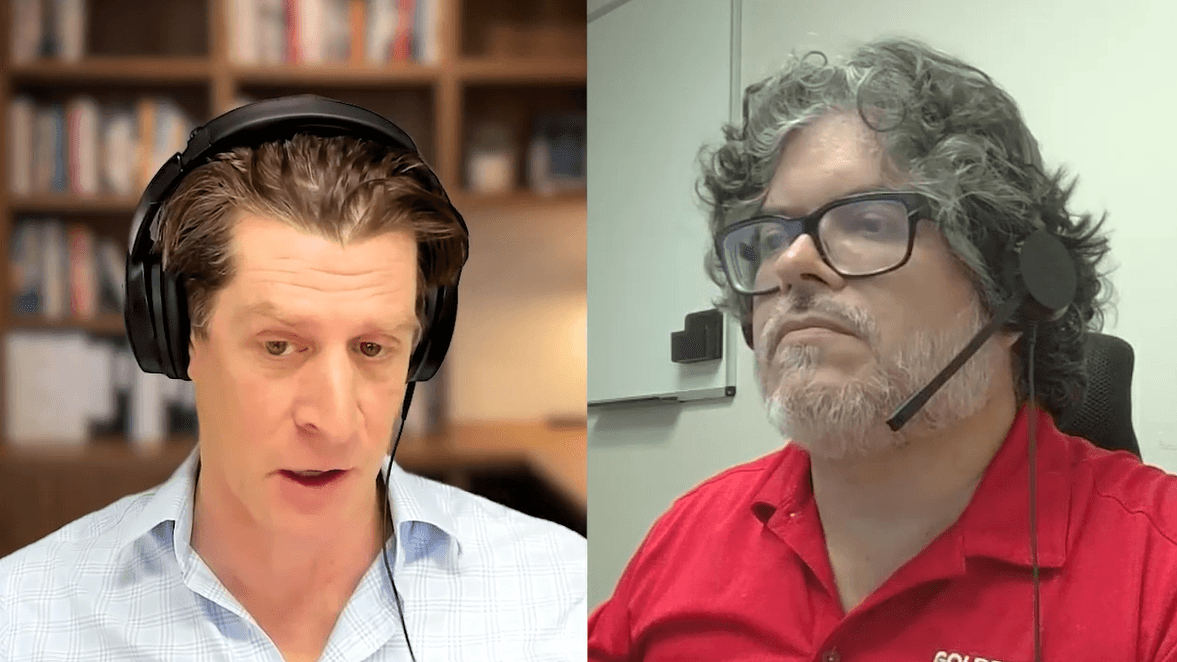
Host: Andy Anderson | Guest: Brian Falchuk
You're listening to "The Future of Claims," a show about the changes happening in the world of insurance claims. I'm your host, Andy Anderson. I've spent over a decade at the intersection of insurance and technology as a founder, a CEO, and a podcast host. We're going to sit down with some of the leading minds in claims to hear how they think technology, people, and organizations will transform claims over the next 10 years. Well, Brian, I was so looking forward to this.
We've known each other for a while. I was lucky that you would hang out with me when I had my last startup and advise me a little bit. But I feel like every time I talk to you, I get so much out of it, and the things that I hear reverberate in my head for months. And I'm not trying to puff you up, but it is true. You are a guru in the world of insurance, and so I was so looking forward to this.
But for those who don't know you, I'd love if you took one minute, two minutes- Yeah ... to tell your background and what you do now and why we're chatting maybe. Well, thank you for... That was really kind, and it's nice to know that, that it's not just me rambling on, going nowhere. So I'm glad that it's been valuable to you.
So I'm Brian Felchuk. I have been in P&C insurance for 26 years this year, and I've had the luck, and I don't know, it's probably just luck, getting to see lots of different things in the industry, different functions, different geographies, different lines of business, and I've learned a lot in the process. So I've worked at big and small carriers, specialists. I ran ops for a carrier. I was chief claims officer for another.
So I've had a pretty cool mix of experiences on the carrier side. I spent time at McKinsey consulting to other carriers, and then I made the big jump to InsurTech. Ran sales for an InsurTech that I was a customer of, and that rounded out my understanding of the whole ecosystem. And then I left to start to try to help the industry more broadly move forward and advise startups and carriers as well about how do we do this, because it's really hard. And that's the context that I met you in.
Started putting out a book series called "The Future of Insurance," and I've gotten to have some really cool conversations and build relationships along the way. And about three and a half years ago, I also took over an industry trade organization called PLRB, and I've been really focused on a bit of revitalization and modernization, but more importantly, setting the path for the organization going forward to we help carriers in the delivery of claims to really make sure that we are evolving as the stresses on our member insurers are also evolving, and we're there to support them long past me, well into the future. Yeah. So that's been fun. Yeah.
And I love the book, and for anyone who's interested in insurance or an insurance nerd, I think there would be the number one book I would recommend to understand what's going on. And company motto, at least of ours, is "Make new mistakes," and I feel like- Yeah ... reading those books is a good way to start. A bunch of successes, a bunch of other challenges that others have faced, and again, try and avoid them. But I think your background, you've uniquely been in claims from a couple of different seats, running- Yeah ...
head of claims for the US operation of, it was Hiscox, right? For Hiscox, yeah. And Hiscox was, what was that book of business? What type of claims was that mostly? Well, I would say Hiscox is awesome.
One of the most amazing places I've ever gotten to work. Just incredible team, and I hope at least one of them's listening and feels good right now. They were amazing people. It is a specialty lines carrier, so you have cyber. But then we also did some of the mainline stuff.
So yes, there was a property team. We also did terrorism and kidnap and ransom, and we had a direct book of business and broker distributed. When I got there, we were, I don't know, 400, 500 million, and when I left, we were about 800 million. So we're growing really fast. That direct business has skyrocketed.
But yeah, amazing company. Really, really cool business. And before that, I was at Beazley when they were setting up in the US and before the breach response cyber policy came out, which is basically what all cyber policies are today, is a breach response policy primarily. So it's really cool to see the creation of that and Beazley getting bought by Zurich now. It's come quite a long ways.
I was like the 500 and some odd employee and one of the early ones in the US, so I think it's a little bit different today. But it's cool to watch. Yeah. Fun. Well, I think, and we've been able to touch base, I feel like every couple of months, maybe it's longer than that, over the last couple of years, and talking a lot about what's happening in claims overall.
Yeah. And I'd love to touch on some of the themes around claims, and I think one of the ones from Hiscox, from Beazley, you dealt with a lot of more complex claims and litigated claims as well. Yeah. So- Everything had some litigation or threat of litigation in it. Yeah, so I think maybe let's start with what you're seeing overall, like the trends, and also obviously your seat now running an association that's thinking about trends across the industry.
What's happening with litigation trends, social inflation, nuclear verdicts, any of those sorts of things? Yeah. The ridiculous thing is the trends are exactly the same as they have been for many years now. The other ridiculous thing is that they're just worse. So there's nothing that I could say that's materially different or new.
You could say inflation, inflation, not just social inflation, but core inflation is a lot worse than it used to be. And we had the post-COVID driven inf... I mean, during COVID, if you're in property claims, you completely understand the way lumber prices were moving, and while that's not a litigated claim per se, there are litigated claims where that stuff comes up, or auto claims, and then there's an attorney involved. But the base unit of cost of that claim, the medical costs or the physical damage to whatever the property is, whether it's stationary or moving property or a human body, all of the cost of that unit went up. And then you add in the pain and suffering and the arguments and everything else.
So that That's been going on for years, and that has only gotten worse. We're past the COVID era inflation, but then we've got the tariffs came in, and now there's the war in Iran. It's like, this isn't stopping. And I don't think anybody buys the lies that things are better, because they're not. Everything is dramatically more expensive.
My son and I went to Chipotle. We did not live like kings, and it was over 50 bucks. I don't get that. And I'm not knocking Chipotle, but that is absolutely absurd. It was delicious, and yes, I got the guacamole, and I know that's an extra charge, but that still doesn't mean two people, over 50 bucks.
And we all see that everywhere. So like, that is a baseline just issue before you even talk about what's happening with the way litigation happens and the tactics, and you mentioned "Nuclear Verdicts," it's a book by Bob Tyson that names that loss. And it used to be about the actual size of the verdict, but they look at it quite differently now, and they're looking now at the percentage of the demand, because $10 million, that was the threshold. I'm sure everybody listening is like, "Oh, that's not that much." Let's just put that in perspective. If you had $10 million, you could draw, if you take a conservative view of 4% per year, you'll never be able to outspend your principal.
You could live on $400,000 a year of income from that $10 million and never run out of money. That is a massive amount of money. And that's not to say like, well, what if the person's medical costs and it like... But just baseline. Very few people make $400,000 a year.
So that 10 million bucks is a ton of money. What's worse than just that, though, is most of that money's not going to the injured party, and that's a real perversion of the system. And so that's where the nuclear verdicts are out of hand. People's baseline feeling of what dollars are acceptable or not is out of hand, and it's really just ratcheting up, and that's the same tone in the entire society. It's not just about lawsuits.
We are very much, between social media and advertising and everything else, we are trained to get really worked up about things and feel like it's time for retribution, and we got to teach people a lesson and punish them, and everyone's got to make out ahead and be a con artist. That's disgusting. That's a total perversion of society, and it's the idea that there's no losers in that, or they're victimless crimes, or it's free money is absurd because society pays for that, because the cost of everything goes up to fund that. So all of the trends are the same, but there's a ratcheting up. The snowball is absolutely gaining size and speed.
The good thing is there are some things that are starting to come about that could change that. But I do think it's time for the industry to be much stronger. I think we've really been scared of speaking up and speaking out against these behaviors and the drivers of it. We can't afford to do that anymore. So I think it's time for, I don't want to say fight back, but it's time for us to be really smart and start...
We are smart. We should be flexing that intelligence to get better outcomes. Yeah. And I mean, again, I'm sure most of this audience knows these things. But for the- Yeah ...
in case one of my friends listens to it and isn't as clued insurance as some of the listeners. Let's unpack a little bit like what are the... That $10 million, let's start there. If you divide that $10 million, where is it actually going? Why?
Because I think part of the story, and I think we need to understand this if we're going to combat it- Yeah ... to truly tell the story that Joe on the street can understand- Yeah ... of how that dollars actually flow out of that. So the state of Florida had some legislation in 2023 that it passed. In all honesty, every year since COVID, it's been a blur to me.
So if someone's like, "What a fool. It's 2024," I apologize. Yeah. It was being debated for a while, and it passed, I think, 2023, maybe 2024. No, it was 2023.
Okay. So more importantly, when that bill passed on the floor of the state assembly, Congress, whatever the state institution is in Florida, the sponsor of the bill read the math behind the state of things that I think really puts a very powerful microscope on what's going on. And Florida is a bit off the charts, but it's not unique. It's Florida, man. It is an amplified situation- Yes ...
but the same thing is going on everywhere because there's a lot of money to be made in it. When I tell you the dollars, you'll understand that. So Florida, he talked about what percent of litigated claims payouts Florida has as a share of the total in the country, and it is, I forget the exact number, but it's well over half, and that makes no sense. Right. Florida's not half the population.
Yeah. It was like- It's not half the economic value ... it's like 10% of the population. It was like five or eight- Yeah ... out of the population break.
Now it's more than half of the Disney parks in the US. So that's right off the bat, excessively disproportionate share of the activity. So that tells you something's broken in this market. But it's the next stat that really, really got me, and this was in the transcript of minutes of the actual session, which has since been stricken. So there is no public record of this anymore, but luckily, some of the local news organizations covered it.
So I took a screenshot before I lost access to it. But I used to go to the Florida, the legislature's archives to see this stat. Okay, so for every dollar of that settlement or that outcome from litigation, a portion goes to the plaintiff's attorney, a portion goes to the cost of the insurer defending themselves, and a portion goes to the actual person who suffered the loss, so the claimant, whether that's the insured or a third party. Andy, do you want to guess what those proportions are? I would say 40% goes to the plaintiff's attorney.
Okay. I would say 10, 15% goes to the defense attorneys, and I would say, and then the rest, so 45% goes to the Defense Yeah To the actual plaintiff. So before I tell you the actual numbers, do you think that is a fair or appropriate split? No, I think it's terrible. Okay.
Because you just said less than half the dollars are actually going to the person who is supposed to recover from an accident. Right. You want to know what it actually is? Sure. 71 cents to the plaintiff's attorney.
And when I say that stat, everyone stops me and they go, "Yeah, but then they take their cut, and then they give what to the..." Nope. That is their cut. 21 cents to the cost of defense for the insurer, which leaves eight cents on the dollar to the person who actually suffered the loss. I don't think anybody, no matter where you sit in that equation, could sit there and justify it. Wow.
Yeah. And when those are the economics, you can understand why it's a runaway train, and why after that legislation was passed, the lobbying from the plaintiffs' bar is really pushing hard to get it back because that was such a money machine. And I don't care what anyone says about their reasons for doing things or whatever. Whether you intend to be driven by money or not, the vast majority of human beings will consciously or subconsciously tend towards what makes them better off. So I'm not saying people are malicious or evil or any of that.
They may well be. But even if you set that aside, it's just human nature. When you incentivize outcome A, you should not expect outcome B. So when people see there's more money to be had if we can get things back the way they were, they are going to keep fighting for that. And what you've seen since that legislation passed is a dramatic reduction in the premium in Florida.
Now, that doesn't mean the premium's affordable in Florida. It's still unbelievably expensive to cover a home in Florida. But it's far less unbelievably expensive without any change in activity and people are like, "Well, there wasn't a hurricane in 2025." But there were in 2024, and there's plenty of other loss going on. So really, the drivers, everyone's like, "Oh, it's because of the hurricanes." No, it's not. And actually, after Hurricane Andrew, the building codes really did their job.
The rebuilding that went on, Florida is much more hardened than it used to be against loss. And that's not to say there isn't still loss, and it's not bad. It is, and there is. But it's the litigation. That is what drives the outlandish premium.
I'm shocked when I hear what people pay for coverage in Florida. And I can start to say the same thing in a lot of Midwestern states. But that's largely driven by hail, which is a different manipulation because a lot of those roofs should not be replaced or should not be replaced by the insurer paying for it. But for someone saying, "I can get you a free roof." There's no such thing as a free roof. But that's a different issue.
Yeah. Even to me, who's been studying that, that is shocking. And I think we've talked about this, the amount of attention that the carriers are bringing to this, the issue of litigated claims. Overall, claims, I think, has been the forgotten area in many cases. It's been under-invested for the complexity of it is part of that.
But I think you're plugged in the way almost no one else I know is. How heads of claims, how CEOs of carriers are thinking about litigation as a challenge. Again, I'm a huge fan of "All the President's Men," if you've ever seen the movie about Nixon and the Washington Post reporters. Yeah. Follow the money.
That's what D**p T****t said. And so 71 cents on the dollar, that's a stat I didn't even know. And I'm sure these are not new numbers to you. I think $24 billion went into litigation finance in 2024, I think- Yeah ... was the number.
The hedge funds, and I went to business school with a lot of guys who run and work at hedge funds now. It's an incredible asset class to invest in litigation finance because it's a non-correlated asset. It's not tied to what happens in the stock market. Yeah. And when you think about that, the investment, 71 cents on the dollar, a $10 million verdict, and you're basically betting the legal costs like, "Hey, we got to play a bunch of attorneys' fees." Which when you're actually paying them, not necessarily the inflated, what they're going to maybe charge the plaintiff in that settlement- Yeah ...
like, "Oh, no, no. We'll pay you this number," negotiated number. Yeah. It's an incredible, I'm sure, 10, 30, 40 to one- Yeah ... type of return.
Makes DC look like crap. Yeah. Yeah. Yeah. The upside is a lot stronger.
I think there's a few things to what you're saying that are what's changing today, or what could be, or why is it so tough. Yeah. On the why it's so tough for claims, I think there's a couple of drivers. One is that humans in general aren't great with change. Even the most open-to-change, dynamic-thinking folks.
When we're used to doing something a certain way, the idea of doing something dramatically different is extremely scary, especially when the stakes are as high as they are here. So case in point, when I was still a chief claims officer, I was at a roundtable with peers, and this is when predictive analytics were a thing. This is before AI. Elon Musk was already talking about self-driving cars, but he hadn't yet not delivered them. Now he's perennially not delivered them.
But we were talking about predictive analytics, and specifically around litigation modeling, so you could make the right offer and the right strategy to get the claim to shut down versus exacerbating, getting more severe. And there was a guy sitting across the table from me, and his loss ratio was in the 130s. His combined ratio was north of 150, which for people who don't know what a combined ratio is, it's a measure of profitability. 100 means you break even. For every dollar that comes in, you're spending all that dollar.
If it's over 100, you're losing money. If it's under 100, if it's an 80, you're making 20 cents on the dollar. So he's 160-ish, which means- He's losing, yeah, 60 cents for every dollar ... for every dollar he gets, he's losing 60 cents. So the point of that being, what you're doing ain't working, my friend.
And we're talking about these models, and he's like, "Well, our litigated claims, there's a tail to them. It's going to be two, three, four years before we know if we made the right decision with that model, so we can't do that." And I'm just sitting there and I was like Look, this model may not be the right answer for you, but what you do know is the decisions you're making today are the wrong decisions. You have that proof. Your business is not viable. So to sit there and be like, "Well, we can't change to something else because we won't know for years if it was the right step," possibly, but you do know that what you're doing right now is the wrong step, yet you're not going to change from that?
So there is that mentality, and it's a bit of risk aversion, it's a bit of comfort with what we know. I always say, if you give someone a shortcut on a route they take every day, the first time they take the shortcut, even if they time it and see that it's shorter, they will tell you it's longer. It's that discomfort. And we need to be aware of that bias so that we can see past it, because we get stuck in the wrong decisions just because the devil thing. And again, I'm not saying that was the right answer, or whatever it is you're looking at.
You still have to evaluate it and make that call or pilot it and see, but you cannot stay in quicksand when you already know that you're like all the movies in the '80s, like quicksand was everywhere in every TV show, every- Mm. So that's one piece of it. The other is, it's really, really hard to make a business case in claims for anything but efficiency, and I hate that. I mentioned McKinsey, I'm an ex-management consultant. I was a COO.
I love efficiency. I'm all for it. However, shaving points of expense ratio is not why a carrier is or isn't profitable in this industry. If your expenses add up to 30 points and you can do it for 29, that's not suddenly going to save you. And if you went to 31, I highly doubt if you're unprofitable, that's the reason you're unprofitable.
It doesn't mean you shouldn't be efficient and you shouldn't care about it, but you can't make a business case in this industry off of shaving points of cost. What you have to do is do a better job with risk, selecting it, pricing it, managing it once it's yours, and the handling of the claims and the claims outcomes. That's incredibly hard to prove to a CFO when you're trying to get the budget dollars to invest. Because I could sit here and say, "This is what we're doing on homeowners claims, and this model will help us dramatically, or underwriting of the homes, and then we're going to do this on the claims, and so we're going to knock 10 points off the loss ratio." That's profound. However, what I couldn't control is the fact that we had the worst year for hail ever.
That could've been a conversation in 2022 that a carrier was having to invest and deploy something in 2023, which turned into a horrific year for hail. The number of carriers who were already deep into reinsurance halfway through the year without a single named storm hitting yet, just because of hail. So you thought you had the silver bullet, and then the CFO's like, "You asked me for $80 million for this solution because it was going to change the claims outcome, and on our $10 billion book, you were going to knock 10 points off the loss ratio. That's a billion dollars. That is a ton of money.
But instead, your loss ratio went up two points, so you just cost me 200 million plus the 80 million that you asked to invest." Because they're two separate drivers of it. The problem is we can't just isolate the thing we were trying to fix or isolate that new approach that really might have been the right answer from all the other stuff going on, lawsuits, social inflation, whatever it is. So it becomes very tough to make a business case off of indemnity results, off the actual lost cost. And that means it's hard to invest in it and it's hard to sell it. And so I see people shy away from that, and that's where we end up losing.
Defense teams are drowning. Tighter deadlines, thinner margins, and the plaintiff firms armed with AI and litigation defense. That's why we built Oraclaim. I'm a former insurance executive. My co-founder is a former litigation defense partner.
We built Oraclaim specifically for the work defense teams actually do inside a fully closed, secure system. The result? Faster, more comprehensive work, better outcomes for carriers, increased profitability for firms. Today, Oraclaim is being used by top national insurance defense firms and regional boutique specialists handling workers comp, trucking, construction defect, med mal, toxic torts, and everything in between. Oraclaim, AI for the defense.
Learn more at oraclaim.com. That's O-R-A-C-L-A-I-M.com. It's so fun to talk to you, Brian, and my mind goes a couple of different places. Because I get passionate about boring things. I mean, again, you're talking to a super insurance nerd, so yeah, I'm loving this.
But I live out in the Bay Area, and one of my favorite books is a book about, it's a semi-autobiography of Bill Walsh called "The Score Takes Care of Itself." And so everybody knows Bill Walsh was multiple Super Bowls, but when he took over, they were the worst team in football. And the thing is they went, I don't know, two and 14 before he took over, and then the first year he took over, they went two and 14 again. And so it was like he was just absolutely tearing his hair out. But he had done such a good job of working with his owner, Eddie DeBartolo. I mean, he literally had this binder that was about five inches thick that was how he did, why he did everything that he was doing.
And I'm reminded of that. It's like you've got to-- And then within, I think the next year, they did a little bit better, but then by year three, although not again, they did pretty crappy, but then year three, they win the Super Bowl, I think is my timeline. Again, my brain is also a little hazy. But are the carriers that short-sighted and that siloed that they can't appreciate the short-term noise from the long-term trends and what's impacting what? Yeah.
Well, I feel for CFOs in the position that they're in, especially if you're public. And the weird thing with insurance is even if you're not public, your numbers still are, because you have to report everything into the states. Yep. It's all statutorily required. Yep.
And they're going to scrutinize it. So It's an interesting industry in that I can see all the data. I see all your filings, all your numbers, everything. Even if you're a privately held family-owned insurer, there still are some. They got to spill the beans on everything.
Yep. So there are a lot of eyes on it, including regulators, including the rating agencies and the capital providers, your reinsurers. And so if you're showing material weakness in your finances, that's a real problem. If you're downgraded in terms of your risk capital by whether it's AM Best or whoever you're rated by, you may not be able to insure certain people. I worked at a med mal carrier, and the hospitals that we insured weren't allowed to get insurance from anyone below a certain AM Best rating.
And so that's like, okay, so we're just out of a certain market. Or an agent might be afraid to recommend you if you're on shaky ground financially, because that's their... If you fail. So yeah, it's actually a really big problem. And so for a CFO, it's like, what was the old saying?
No one got fired for buying IBM. You need some level of certainty, and the budgetary year or the quarterly results, those matter to a finance person. We have the mechanism of mutuals who can take a longer view, and many of them do. The problem is that the first problem that I talked about, that aversion, that risk aversion, that discomfort aversion, that also tends to be stronger in people who take a longer-term view, ironically. So there's a push and a pull to these mechanisms, and it takes more of a willingness to be uncomfortable with that.
And remember, for a leader, if you're going to bet on these things that have a long-term, a necessarily long payout period, you're not going to see anything in the short term. You're actually going to see things worse because you've spent more, and there's all the change that goes with it, and figuring it out, whatever. Basically, you're just helping your successor, and you may be hurting yourself because the results will be worse while you're running the ship. And so your bonus will go down, or your comp will go down, and you're going to have a tougher time. It all sounds like that shouldn't matter, but that is human nature.
Yeah. Well, you have the benefit of the experience but not the responsibility right now. You're not in that seat. So let's- But I have been. Yeah.
No, I get it. But so- Yeah. I'm just saying, it's easy for me, but I've also been there. Yeah ... let's at least, for those who are listening, for those who listen to this, let's talk about what they should do.
Not all the reasons why they may struggle to do it. Yeah. But what do you think actually is going to move the needle here? And I think also, again, in full disclosure, the name of this show was modeled off of you. We're "The Future of Claims" because you already have the future of insurance, and I wanted to shine a light on this a little bit.
What does it look like, and particularly, how does AI maybe play a role? Because it is this moment of platform shift and massive, I think, the potential for more disruption in claims and investment in claims than we've seen in maybe a generation. I don't think you can answer this in just claims, and that's part of the problem is we are too siloed. Because it starts long before the claim. But setting aside a lot of that, once it's at the point of claim, now we have from first notice of loss all the way through, we have all of these moments where we need to do better.
And the cool thing is, for every single moment I can think of, there actually is a solution right now. Whether it's the solution or the end-all be-all or there isn't room for it to grow and get better, yes, all of those things. But there are things you can do at every point now, and that's what really excites me. So from first notice of loss, how are you pulling that into your systems? How are you using third-party data to enrich that file, that claim?
It's just an incident. You haven't determined that it's a claim yet. But to enrich it so you have everything that the adjuster needs at their fingertips already in the claim. And I say that the adjuster needs, it's not just the adjuster who needs. What models are you running on it?
What AI are you putting on it? Predictive analytics are still fine. What are things you're looking at in that claim to start to determine what to do with it and how to do it? You can summarize brilliantly today. Some of these lawsuits are absurd.
There's a solution that someone just reached out to me about that ingests all of the documents and gives a really clear dashboard. Or they say really clear. I'm sure it still, to an outsider, would be terrible, but to an adjuster, it's like this is brilliant. A summary of this is the whole situation with the claim, and you can click into any of the details to read the documents or to see where it got that piece of information from. But the page limit per document is 200,000.
And that's like, "Oh, we'll never hit that." I've seen stuff that has come very close, though. Some of these documents are absurd, and people have had to go through them, or you're paying attorneys to go through them, outside counsel. It's tons. AI do that really fast. That's game-changing because the sooner you start to take actions, the less severity you're likely to face.
Because all the time that's accruing in a property claim, it's really easy to see why the cost goes. It's like, well, you're paying for alternative living, or there's more damage being done and more personal property is being destroyed by the water, whatever it is. With a lawsuit, it's like, well, they filed the suit, but what else is going to happen? Well, the longer things go, the more angry people get, the more evidence they might pull together, the stronger their argument may be, the more anxiety everyone has. Time is the enemy for a rational and reasonable outcome.
Or even just maybe they're not represented yet. Maybe after that hailstorm, no one's knocked on their door yet. And so you have a chance to get on the right side of this to fix the roof correctly versus having someone say, "Hey, I can get you a free roof." I don't know why they get a scratchy voice, but they have a scratchy voice. So to be able to get the claim to the right person as quickly as possible with the facts assembled, with a view on what's going on, with a sense of next best actions, and the right plan of attack, and the right facts pulled together The right comparison points, the right suggestions on like, okay, the demand is X, this is what a reasonable number is. And then you start to get into like, well, how do we get to reasonableness?
And there are some very cool platforms that have come out and some cool solutions that have come to the market where we've generally been like, "You're asking for $200 million, we're going to offer you $18,000." Like, okay. That's not going to- We both know you're wrong. Both of you are wrong, and this is all posturing, and it's playing games. And all this is going to do is slowly, you're going to find some middle ground that's probably going to be skewed one way or the other. And social inflation would tell us which way it's likely to be skewed.
You may just make yourself look really bad in courts like, "And they thought it was only worth $18,000. And look at this poor person and what they've been through." You're just setting up the wrong outcomes. So we have better decisioning with better information that we come to much faster, and then we have other platforms that have come to be that allow us to act on that in a more effective way, and de-escalate and take out the risk that we have front page of the news activity going on. Those are the kinds of things that I think could be really impactful in claims. And honestly, everything I'm saying and more, I can think of solution providers for each one of those things.
And then the question is like, is it a provider for each one, or are there some larger paths to take? And that's where AI gets really interesting, is like, are we plugging in 15 different solutions, or is there an agentic approach to this with the right data layer that can see- Yep ... with everything. And that then jumps back to not just claims, it's like what happened when they were a prospect? What happened when we were writing them, reporting them, and we wrote them, and all of the service interactions, and whatever else is their signal in all of that.
And what feedback loops do we have so the information from the claim is making it back into our underwriting models, so we learn and we do differently when we see a risk like this next time. All of that is way more than any human can deal with. And even though we have a lot of processes for the feedback loop to do our annual rate reviews or form reviews, or maybe it's every 18 months, we tend to be way far behind. If we could have that feedback loop more real time, that's transformational. And I got to see that in a non-technology context with my time in specialty lines, where claims and underwriting and wordings all cut around each other.
So they're all hearing what's going on from like, my team was hearing what was going to come hit us down the road that was being underwritten right now. And the wordings folks are picking up all that and building it into the form. So we can do that with technology. I guess, and I actually have been thinking about this, and I was speaking at another association about exactly this idea, some of the challenges of change. Yeah.
Because I think there's a really good book, which if you haven't read, you should check out, called "Switch," which is by two brothers, the Heath brothers, who have studied change management and what works. And they talk a lot about the obviously a holistic change is probably best, but- Yeah ... success often, if you study what actually works, it's often picking much, much smaller, much more mini steps. Right. Because to your point, the challenge of the human elements, the emotional parts of doing that change is, in some ways, the biggest.
And so you need to combat things and make it a little bit, like you need to boil the frog a little bit. If you do it- Yeah ... too much, it's actually a bit of a wives' tale. Frogs will hop out anyways, but you make a bunch of small changes and pick where you can potentially see some of the biggest changes right away. And I think- Yeah ...
obviously, I'm running an AI platform for litigated claims, and I think I'm really interested in litigated claims in particular because, and I think you probably will know the stats better than me and correct me on what I believe some of the stats to be, but I think somewhere less than 5% of overall claims are litigated, and yet those account for something like 50% of total losses. So that's small. You could see very, very significant changes in indemnity with- Yeah ... a few different movements. And even among those litigated claims, those truly the nuclear or the big ones, again, account for a very small fraction of those.
So- Yeah ... this effort to triage, to understand, ideally, yes, we'd do it on every one, and there'd be this beautiful feedback loop where everyone's working together. But we also both, at least from my perspective, I'm not sure it's going to happen in my lifetime, except with maybe a new carrier, like whatever. But you could see some people do those big 10%-type movements in- Yeah ... in indemnity with some of these changes right away.
Yeah. And for better, you do have, obviously, you have variability in all of these. So you could still be in the situation where one nuclear verdict could blow up your book, but you don't have at least the... It's not completely exogenous the way weather is. You're not going to have the hail.
It is at least somewhat tied. Now, again, your ability to control randomness is we can delude ourselves a little bit. But what are your... Are my numbers, am I in the zip code? Yeah.
The only thing I would ask is when you say litigated, are you talking about what goes to court or what started with a lawsuit? Or- No, I would just say what goes- ... or do you mean demand? Just starts with a lawsuit because- Yeah. I think it's a I don't know the exact stats, and you need to keep in mind there's tons and tons of claims every day on mundane stuff that- Totally ...
there's no attorneys involved, but we don't hear about those. But yeah, there is an increasing number or percentage, I should say. When I talk to workers' comp insurers, and at PLRB, we don't deal with comp, so I haven't done this in a while, but last time I did, I was talking about what can you do earlier on to stop that claim? We call them jumper claims, claims that look innocuous but then go berserk. And they can do that for medical reasons or for litigation reasons.
I'm like, what can you do early on to stop the attorney from getting attached to it? And every carrier I've talked to about that, they're like, "Well, the problem is they're coming to us from the beginning represented." Yep. And that didn't used to happen. And so we don't even get the chance to do something great early on to save the day because it's already gone upside down before we've even heard about it. Yeah.
So now they're trying to figure out, how do we even find out about these things before that's happened? So whether it's 5%, 7%, whatever, it's not the majority, but it is increasing, which just means investment in solving for this will only have more upside over time. Yeah. I think, again, even though I help run a startup that sells technology, I realize that technology, it's a third of the solution. It's got to be, I think McKinsey invented people, process, and technology.
I think that's a McKinsey- I don't know ... creation. But you've got to think of- I don't know. It wasn't you. Not everything came from Brian.
But, yeah, we do have to be holistic about it. I think what we're seeing is people are starting. They're starting to understand that there's an opportunity to change things, and I think you talked about those predictive pieces where you have... I'm a history major, but I've been hanging around with a lot of data scientists for a while, both this current startup and my last one. Some really, really smart folks on the data analysis and prediction side.
And some of these things are hard because just the factors that you talked about, like the data is messy and pulling out what variables are impacting what. But I think I love where your head has gone in that some of these, we don't quite know how big an impact some of these things will have, but earlier information and earlier understanding- Yeah ... seems almost certain. And did that not serve you well? Yes, exactly.
Yeah. What I've been trying to do is talk with people about, like, "Okay, well, what's our break-even percentage on this?" We don't really know, but how much would it have to help for us to literally break even on this investment? Which I think is a nice way, because you start to realize, oh my God, if we just changed indemnity by 1%, this thing will pay for itself- Yeah ... 10 times over, because the break-even is like .1. Yeah.
It's so low on some of these things. One of the things that I think we've talked a lot about is this problem with investment in counsel, because that's one of the biggest problems that we're seeing because there is this, for your most problematic claims, they're litigated. And when it's truly problematic, you're sending it off to a third party because you're hoping to get experts. But then there's this self-defeating motion where they then are essentially negotiating these terrible rates and then doing billing, doing bill review that is often draconian. And so you're literally shooting in the foot the person that you're hoping is going to help you the most.
So I'd love to, I know you took a slightly different approach when- Yeah ... you were in some of these seats, and what would you recommend, and what did you do there? Yeah. So I can't speak for whether this is the strategy today, but when I was there, and this was globally and had been through the history of the company, is in Hiscox, we looked at it as a specialist, expertise really matters. We needed to be experts on, and the same was true at Beasley.
We needed to be experts in the risks that we're writing, and if we're not, then we have no business writing them. And the same was true for the claims that would come up, which also means we need to work with experts. While we were a good size carrier, we were a fly compared to some of our competitors. So to think that we were ever going to give enough volume to any of the counsel that we work with, no matter how much we consolidated with one firm or another, we were never going to be their top revenue source. So we didn't necessarily want to pay the most because then maybe we're getting taken advantage of, but we wanted to be top quartile in terms of what we were paying per hour because we needed them to care about our work.
We needed them to respond when we reached out. We needed them to make us a priority. And I went out for a lunch with one of the firms that we worked with. I paid. We didn't go to Chipotle.
It wasn't super expensive. We just got pho or something. It was not too expensive. But he said, ironically, because we were eating, he's like, "When we do work for you guys, we can eat." And he didn't mean like we bring in lots of food and we all work late- Yeah ... and we just bill you for it.
He means we can afford to actually run our business at a reasonable margin when we do work for you. We do work for one of your competitors who's 10, 15, 20 times bigger than us, and they do way more work for them, but they're just scraping by or losing money on everything they do for them because the rate's too tight and they're getting to rip the part on the management of it. Now, I saw lots of firms that were taking advantage and were doing things they shouldn't have been doing and were not what we agreed on, and we called that out, and they fixed it. And then we thought about that when we look to give work next time because we're trusting you with something very important to us. We expect a level of respect back, and we're paying you fairly, so we don't expect you to find ways to take advantage of that.
I had no idea that some of the billing platforms actually charge the law firms for the bills because I was paying for our bills to flow through it. So I had no clue that these platforms are charging both sides, and that doesn't feel honest to me. Maybe they're disclosing that now, maybe that wasn't the practice then, but I was just at PLRB's conference talking to some defense counsel, and they were sharing that. I was like, "Wait, you were paying to be on the platform as well?" It's like, "Yeah, we had to pay for the privilege of having our bills hacked apart." It's like, I don't get it. Both sides of the equation are paying for it, and there's actually a perversion in that because we were paying a success rate on how much savings they discovered in the bills for violations of policy.
So, that works against-- They're getting paid on the other side for the size of the bill. So I'm like, I don't understand ethically how that works. And maybe I'm misunderstanding, or maybe that's not the practice or whatever. Oh, yeah. But I don't have a problem with bill review.
It is necessary, and it's very helpful to have the structure around the billing, and frankly, to be able to outsource that, because my own in-house attorneys were looking at the bills, and that's not a good use of their time. Mm-hmm. But that, like how we looked at rates- Is that a loss? ... also has to be fair and respectful.
And so I think you can do both things. I think you can have on-policy fair practices from the outside counsel you work with, and you can be fair and respectful to them the same way you're asking them to be with you. They're not mutually exclusive, and unfortunately, I think a lot of them are, it's back to this point shaving expense thing. It's like, "Oh, well, we can just be tougher with the counsel." No. Do you understand how much money is at risk if this isn't done right?
Yeah. That matters more. Again, I think the numbers we talked about long ago, it's like 80% of the cost is in the indemnity. Less than 20 is in the expense, which includes the attorney expense. Yeah.
If you're focused on the attorney expense, you're focused on the... Again, are you going to cut their bills in half? No way. But how much? Did you guys do any analysis on tracking- Oh, yeah ...
okay, gosh, if we... Yeah. Yeah. We did. We were on the lower end for errors in the bills or violations of it.
And generally speaking, it was only the one-off attorneys. It wasn't the ones that were on our panel. And every now and then, we have a policy form that would've allowed, or an underwriter made an exception or a broker pressured, and the underwriter didn't understand why. Using the guy who did your incorporation to handle your EPL lawsuit is not a good idea. I don't care how much you like and trust him.
That is a very bad idea for you, let alone for us. So those are the ones who just view it as like, "This is a one time I'm ever going to do this," and like, "My friend's never going to know, so we're going to elect-" But how about, did you look at all at like, okay, gosh, how is our legal spend compare? How is it in changing indemnity? Yeah. Did you do that?
Yeah. It's a hard math problem. Yeah. My peer who ran the UK claims team actually built a tool with our data team to look at the legal expenses relative to the indemnity, and you would think that it was like, "Oh, we're spending too much, so we got to be careful." And actually, it was more like, you should be worried if you're overspending, but you should also be worried if you're spending very little. So it wasn't to cap the spend, it was more a ratio.
It wasn't like how many dollars, it was relative to the indemnity. Because what we're trying to figure out is like, what is that relationship, and is there a safer zone, and is there a danger zone, either for being taken advantage of or overspending? Because you can also run away and be like, "We're going to throw the most expensive lawyers at this," and it's like that's not the right strategy. Or you're being too penny-wise and pound-foolish, and like, we're only going to spend $100 an hour when actually the going rate is $280 or whatever. And it's like, yeah, but your indemnity- You're going to get what you pay for ...
could be out of hand. So it wasn't that there was a specific number. It was like watching scales. So we had this dashboard, and I would see, relatively speaking, do we have an area that I actually should be focusing in and saying, are we thinking about our legal strategy correctly here? Yep.
And might there be something else, whether it's up or down? Yeah. Well, Brian, we could literally talk for another hour. I could. You can hang up, and I'd keep talking probably.
No. And I would love to do it again, maybe hopefully this is part one of more than one. But you got to jump, and I got to jump. Brian, this is so fun. Really appreciate it.
Anytime you want to come back, I think you see things that others don't, and you're willing to say it as well, which is also nice, because I think a lot of people are thinking these things, but they just either are incapable of putting words to it or are not willing to. Or not allowed to or whatever. Yeah. I don't have to worry about that as much. Good stuff.
Thank you so much, Brian. Thanks, Andy. Awesome. Cheers.