Podcasts
Episode 1: Closed Systems, Strategy, and the Future of Litigation with Frank Ramos
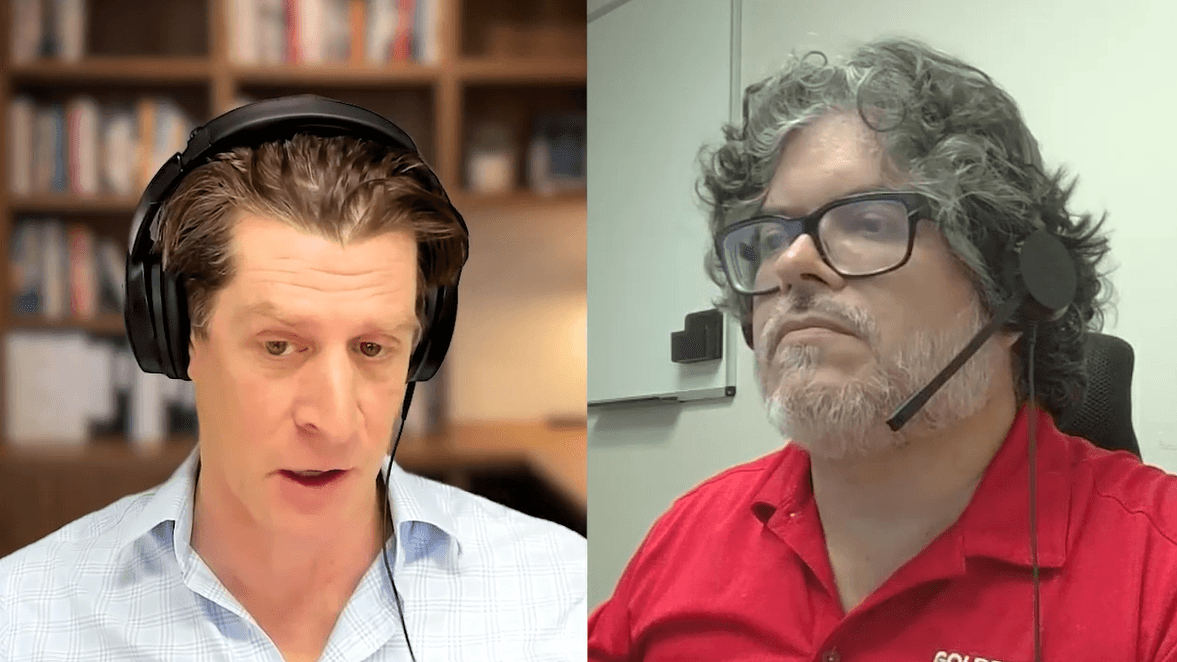
The Future of Claims — Episode 1: Frank Ramos
Host: Andy Anderson | Guest: Frank Ramos
You're listening to "The Future of Claims," a show about the changes happening in the world of insurance claims. I'm your host, Andy Anderson. I've spent over a decade at the intersection of insurance and technology as a founder, a CEO, and a podcast host. We're going to sit down with some of the leading minds in claims to hear how they think technology, people, and organizations will transform claims over the next 10 years. Frank, thank you so much for coming on "The Future of Claims" podcast.
Really appreciate you taking the time. For those who don't know you and your background, I'd love if you'd take a minute and just introduce yourself, how you got into the world of insurance defense. Sure. So I graduated in 1997 from the University of Miami, here in Miami, which is where I work, and my first job- The U. Yes.
Almost made it. And so I ended up- Eastside ... working initially at a very large national defense firm. About a year into the practice, I wanted to go into a smaller firm, and then joined a smaller mixed commercial products insurance defense firm, and was there for, I want to say about 26 years. And then two years ago, I went full circle and came back to a large defense firm, Goldberg Segall.
I've been here approaching two years, and so my 28, 29 years of my career, I've always been doing the same type of work, but started at a large firm, went to a more boutique-sized firm, and then ended up back at a large firm. Cool. And tell me a little bit, what are the type of claims that you deal with? What are the type of cases that you work on? I've been pretty blessed.
I've worked on a wide range of cases. I've done everything from asbestos to zoning in my career, and handled asbestos, talc work, drug to medical device, legal, medical malpractice, general liability trucking. I've done commercial litigation, IP. I've tried eminent domain cases and civil rights cases, done employment litigation. And so construction defect, the list goes on and on.
And again, I think because most of my career was at a smaller firm, we ended up just taking a lot of things in that maybe larger firms are more specialized in. And so I was very blessed in that regard that almost 30 years out, there are few litigation cases I haven't handled. Yeah. Well, and you live in Florida. Lots of weird things happen in Florida.
Florida men are everywhere. Well, amazing. And I think, one, I'd like to perhaps get your sense of what's happening in the world of litigation defense and insurance defense, and I think Florida has, in some ways, led the country, I think for better or for worse, around some of these things. Obviously, there was some headlines around Morgan & Morgan filing 70,000 lawsuits in a single week in Florida. Right.
And there was some stuff going on there. There's obviously been some tort reform in Florida as well. But would love to just get your perspective, and before we talk about AI, what's the state of insurance defense as you see it, and some of the challenges that are happening in this world? I think insurance defense is constantly evolving, and in this space, when it comes to personal injury, whether it's premises, negligence, security, autos, product, all those areas, I think a lot of legislature, especially in red states like Florida, are always trying to tamp those down. You mentioned the 70,000 cases.
That was in response to tort reform that happened in March of 2023, where significant changes were made. That followed significant changes to our first property claims. After every time there's a big storm or hurricane, there are lots of claims in the tens of thousands related to property damage, and those are first party claims. And the Florida legislature, I think in 2022, addressed those significantly, and then followed that up in 2023 with revamping the personal injury lawsuits. And what's interesting is that people thought that was going to reduce the number of lawsuits, and I haven't seen that.
I think for firms in our state, they continue to grow, they continue to expand, they continue to add headcount. And every time there is some effort to significantly reduce litigation, it doesn't have the desired effect. You have seen that in first party. You do see a lot, or many fewer lawsuits in first party, and a lot of firms that were focused in that space are shrinking. But then in other areas, they continue to grow, like premises auto, construction defect.
As more and more people come to the state, you have large construction projects, and almost invariably, all of them end up in litigation. Those lawsuits last years. They have multiple parties. And so wherever there seems to be some effort to reduce litigation in one area, another area seems to grow and replace it. So I haven't seen significant slowdown, if anything.
And because of all the lawsuits that are filed and because of all the new lawsuits that are coming in, Florida courts have tried to address that by putting everything into a federal court approach, where everything immediately gets set for trial. You have a case management order every case. You have a shorter trial period or shorter period to which to prepare to try the case. And myself, and I think most defense lawyers across the state, are on multiple trial calendars, and I don't think we've ever been busier. So there's a certain irony that in a state that's so focused on tort reform, the litigation never seems to slow down.
Yeah. It's like pressing on a balloon. You press one area, and it just goes to another. Right. Perfect.
Yeah, but I think underlying that, the ability for that one firm, plaintiff firm, very large plaintiff firm, but also has been quite active on the technology side. I think certainly, and some people may know this, some may be news to some, Morgan & Morgan was one of the early investors in several technology firms, Even Up! in particular, which has become the darling of AI-powered plaintiff lawsuits. And I don't have full visibility into how Morgan & Morgan did that, filed those 70,000 lawsuits, but it would really surprise me if they didn't use AI in order to do it, to do that at that volume, even as big a firm as they are. No, they definitely did.
They're very open about that. Yeah. So, and then I think what's interesting is that overall, there's changing of the expectations. The playing field is changing for folks, and I think the Some of the stuff that you talk about with additional trial dates and immediately on those court dockets, it's changing what's required of insurance defense. And so to do things the old way, from what I'm hearing, is really challenging.
You need to level up your game if you're on the defense side just to keep up with table stakes. Right? I agree. I think, yeah, for Morgan & Morgan specifically, and just generally the plaintiffs' bar overall, they've been much more adept and much more forward-thinking in the AI space than defense firms or defense clients. And you did mention that they have, I think they have several proprietary platforms, some of which they license to other plaintiffs' firms.
And there are all sorts of platforms out there in terms of creating demand letters. The demand letters I receive these days are much more sophisticated, have much more information, and clearly could not have been created by a person, because it would have taken them a week to prepare these letters I've been getting these days. And just they're better prepared at depositions, at mediation, at trial. It's clear to me that AI has certainly lifted up the bottom-tier firms. And not to cast aspersions, but clearly, I think it's basically whenever you have your case list and you look at the firms you have, I think traditionally or historically, most defense firms have put maybe a quarter of their cases in a bucket where they're dealing with sort of under-financed, under-supported firms.
They're thinking, "Well, these are okay. I know that they can't have the punching power to disrupt these cases, so I don't have to worry about these cases that much." And I don't think that's true anymore. I think it's very rare, no matter what the firm is and how experienced they may be, or whatever resources they may or may not have. I'm seeing that across the board, better depositions, better motion practice, better discovery requests, better efforts to secure documentation, interview witnesses, and that's not a coincidence with that and the rise of AI. Yeah.
And on the other hand, I think a lot of plaintiffs' firms are using it very creatively to not only stay good, but improve and become much better, and becoming much more clever at leveraging items like reptile theory and others, where they go to these LLMs, they use them, communicate with them, come up with even better cross-examinations and better approaches with our corporate representatives. So they are, I think, far ahead of how they're leveraging AI, how they're raising the bar, how they're training their people, because they're using AI to train their individuals and their teams and so forth. And I think the defense firm, for a variety of reasons, we're always very conservative, we always are very concerned about a lot of issues. There's been a lot of issues out there with individuals misusing AI, and once bitten, twice shy, and I think defense firms have been reluctant, and I think some of their clients have been reluctant to go all in on AI. And so as that reluctance takes a foothold, more and more firms on the defense side, more clients on the defense side are giving up more and more ground to the plaintiffs' firms.
You made a great post a while ago that I saw, which was around the strategic elements that are happening even in what happens with discovery requests. Right. And so if this is a game of poker between the two sides, there can be a huge amount of tell that happens from those discovery requests. And I would love for you to talk about how you think about how that game is played at the strategic level, and maybe how technology changes it for you and what you're seeing from others. Yeah.
I think historically, on both sides, people rely on forms and what they've done historically. And what I do, and I see a lot of other lawyers, more forward-thinking lawyers do, is that they will take their closed AI platform, we use Copilot, we have a closed system, upload the other side's discovery or complaint, or they would upload our answer and just say, "Hey, what else can I be asking for or thinking about? Or where are they coming from? Or what does this indicate to me?" And play devil's advocate and use it as a... To think through an idea.
To try to figure out where the other side's coming from. A sounding board, if you will, about what they're trying to say. And some of it is not good, some of it is silly, but some of it is actually very thoughtful. And having the ability, and appreciating, as I'm sure a lot of your listeners know, the way these platforms work for the most part is that they scrape everything there is on the internet, good and bad. But there's a lot of good out there.
There's a lot of content that lawyers share on podcasts, on YouTube videos, on white papers, on their websites, all of which is being looked at, digitized, and data points being removed from there. And yeah, some of the stuff you're going to see is slop, but some of the stuff is actually very intelligent. And AI in the right hands, and I think AI really lends itself at that level to more experienced lawyers than young lawyers, because the young lawyers may not be able to separate the wheat from the chaff. But I think experienced lawyers can look at the product and say, "Well, out of these 10 data points or these 10 examples that they provided, three are dumb, three are okay, and these four are really good, and I never thought about these four. And now I'm going to incorporate this," or, "Now I realize that this is where they think our jugular is, and I need to better prepare my client because these requests or this approach or this motion suggests to me that what they're really heading for is X." And one of the most important things I do as a lawyer, we can do as lawyers, is to avoid surprises for our clients.
And if the other side's being much more clever using AI and we're not doing it, we're going to be surprised left and right. We're going to be thinking, "Well, they're never going to think of that." And they are thinking of that. And again, there's just so much content out there that there's been this shift, I want to say in the last 10, 15 years, where we always held our cards close to our vest, and we didn't really disclose to others what we were doing or thinking or our secret sauce, and there's no more secret sauce. It's all out there. One or more people, and usually hundreds of lawyers, have shared their expertise, and they've used that as a marketing tool to convince others that they should be hired.
But in the process, they've disclosed just a wealth of information and data that each of us can leverage, both on the plaintiff and defense side. Understanding the plaintiffs' firms are very generous with sharing information. So are a lot of defense firms. And having all of that sifted through dozens of algorithms to get me responses that I need is very useful. So understanding how the platforms work, understanding how to prompt them, understanding how to leverage them.
Again, the plaintiffs' bar, I think, is well ahead of us. Yeah. No, a lot in that answer that I want to dig in and talk about. So I think that idea of a closed system for those listeners who are less familiar with some of these terms, there are Open systems, ChatGPT, Claude, et cetera, in their lowest level tiers, they are open systems. What you put in there could potentially, models are training on them, they could be potentially leaked, versus a closed system where it's protected.
If you're at the highest level, like how we use these models, they have literally a zero retention policy, so they literally say that they will not train, even retain data. And I don't know, did you follow at all the "New York Times" case where The "New York Times" is suing OpenAI because OpenAI had been training on "New York Times" data. And then, so in the case, there was an order to retain all data for OpenAI as part of the case. And basically, OpenAI said, "Well, we can't actually retain anything because we don't have any. It's just processed.
There's nothing to save because we don't store anything." We saw this. You got this visibility into the security with the power of the court behind it. So it's probably not just smoke and mirrors. I work in Silicon Valley. There's some ifs, but likely.
Yeah. There's some more fun stuff on the legal side because, like avoiding... I love what you're talking about, which is that this using AI as a thought partner, like this, that you can war game and actually get out of your own perspective and use it to get other perspective. Which I think is hard for anyone, regardless of what they do, to have empathy or to put themselves in another person's shoes, particularly when it's an adversary, maybe. Which I think is fun and maybe not the first thing people think about with AI.
Yeah. I think so much we're so defense-oriented, and we walk through a certain pair of glasses and a prism through which we see the facts, and we assume that the other side's approach will be conventional approaches. And you run these syllogisms and examples through these platforms, and you come back with, "Oh, that's an interesting approach. I hadn't thought about them focusing on this issue or that item or this piece of evidence that's going to make their client that much more sympathetic, much more credible, make them much more open, and seem reasonable to the jury." So often, we always love sharing war stories, and they're always ridiculous ones of crazy examples that suggest that the plaintiff's firm or the plaintiff itself is lying or being deceptive, and that somehow becomes the prism through which we see everything. And of course, it's an outlier, but it's a fascinating, maybe a funny outlier.
And everybody gloms onto that outlier. The hot coffee case in McDonald's, this thing becomes the hot McDonald's coffee case, whatever it might be. And that probably isn't even a good example. That was a pretty serious burns case. But we always seem to gravitate towards safe cases and use that as a way to support our preconceived notions about a case.
And as you said, using these platforms, since it takes equally from plaintiff and defense and everything in between, it helps us a much more even approach and a much more fulsome approach to seeing things. And if you're using it the right way, it really gives you a lot of thought. Now, you mentioned this distinction between open and closed, we both discussed it, and you mentioned ChatGPT. There's a difference between the $20 model, which I actually use. I use ChatGPT, I use Claude, I use Grok, I use Perplexity.
I'm starting to use Gemini a bit more. These are all, I think, good platforms, but they're open platforms, meaning that you don't upload or include anything that's confidential, proprietary, or doesn't include work products, and you just keep your discussions generic so people can't figure out, or you're not sharing information. And there've been two recent decisions that are on the heels of each other where one court, there was a party who used, I think they used ChatGPT, and they uploaded a bunch of information to ChatGPT, and they provided it to their attorneys. And the other party thought, "Well, we're entitled to it, so there's no work product privilege." And the court agreed. The court agreed, said, "Yeah, you inputted this information into ChatGPT.
It's an open model. There's no privilege with work product with ChatGPT, so you got to turn it over." And there was a similar order that really didn't get as much coverage where the decision was in the other way. But there was a determination that the platform, I think, was a closed model. It was done at the discretion and order of the attorneys, and it was under the auspices, a model that they could control, and that was inherently closed. So going forward, you can use the open models, and we've always known this, but always be careful about losing the confidential nature or proprietary nature of information.
And so I suspect we're going to start seeing a lot more of that, and I suspect we're going to start seeing a lot more requests by parties when the other side is using open versus closed platforms. That'll be an interesting area to see how that develops. Yeah. So I'm the co-founder of Auraclaim, which is a platform specifically for litigation defense. And our CEO, who's an attorney, I'm not an attorney, I'm a former insurance executive, he actually did a post yesterday about this.
I believe it's the USA versus Heppner decision is one of these. Right. You can look it up. But we put together a little chart around where may privilege be protected and where it won't. Obviously, closed versus open is one.
Is it lawyer-directed? If you're looking for a quick cheat sheet on that, you can find that. Listeners can find that post, and maybe I'll link it in the show notes as well. I think it's a not settled law, for sure. And I think lot of opinions on that opinion, and think it may have been an overreach from the court in terms of at least some of the follow-ons from that decision, if you run them out.
It almost would suggest that lawyers can't use any technology- Right ... potentially, which- Yeah. I was surprised that order, or that type of order, took so long to hit. I know we've now had hundreds of orders on hallucinated cases. I was surprised we had yet to see an order on the privilege issue, and I'm sure we'll start seeing dozens of those.
Yeah. Well, I want to circle back to, well, a few things. I think one of the things that you talked about is that not being surprised, and I think that the strategic elements of AI and the speed advantages. I'm a student of history as well as a huge football fan, and I think in both areas, historically, you see just the advantage of having speed in every In every level of conflict, going back to the Greek times, you had chariots, and then mechanized warfare, and then airplanes, and now space and cyber. Every time the aggressor, if they have a speed advantage, that's very problematic.
And I think what we're seeing with the adoption of AI is this ability for one party to essentially move faster than the other and the potential problems that creates. And just like the mere weaponry, like when Europeans came to the New World, they had guns, and the Native Americans didn't, or when the Spaniards went to Mexico, they had guns, and the Native Americans, the Aztecs didn't. Yeah. And that was a blowout. So it's basically the next level of warfare.
We may have pistols, but this is basically like a flamethrower. Yeah. And if you don't have it, I don't see how you compete. Yeah. We see essentially an arms race happening between the plaintiff side and the defense side, and I think you nodded to it.
I think currently the plaintiff side is winning. Their adoption has been higher, and they've had more tool options. Part of the reason that I started this company was because we wanted to have built things for the defense side. But I want to think about some of the... You talked about even these closed systems and what they're training on, and I want to think through and talk about, because what we're seeing and where we think AI will go is that it will actually use training sets and data that is not necessarily general data sets.
So most people may know or may not, GPT is short for general purpose tool. And so when people are using ChatGPT, it may be useful, but it's not really a tool that's built for legal. And from a technology perspective, there's some debate in terms of do you train models and try and build models that are trained, or do you take these general models and then apply them? It's a little wonky, but we definitely believe, and what we're seeing is that the best adoption of AI is going to use closed data sets as part of their guidance. Whether you actually have to quote unquote "train the model" or not, you can use it as file storage and load it up.
Have you started to experiment with that in your own practice, where you have essentially historical cases or guidelines that you've uploaded into the models or the systems, the platforms that you're using, so that it learns from everything that you've done, you and maybe even your whole firm has done, or any of that? We're not there yet. I've used it on a limited basis with Copilot where you upload specific cases, or I'm going to say cases, case law or specific documents, and you use that as a primary learning data for them to rely on. I created my own GPT. They're easy to do on ChatGPT.
It's called Ask Frank. I uploaded my books and all of my content from LinkedIn and basically put it out there for young lawyers, and I interacted with it, and I was surprised. It's a little eerie how on the nose it was. But I think that's going to be the next, really, and you see this with Harvey, you see this with other companies, that the ideal model, and I'm sure your model is similar, the ideal model is that you take the GPT or the Gemini or whatever data you have, and then you wrap around your data or supplement it with your data, and you have a larger pool, and your data takes precedence. If it's a decision in the algorithm between your data and the generic data, it always goes with your data.
And you could upload hundreds of motions, hundreds of memos, and so forth, and you can go straight in there and have it draft for you interrogatories for cross-production, third-party subpoenas, general motions, or even long form motions. But you have that first draft. The first draft is always the one that's the most time-consuming. There's a lot of things you have to do that are fairly rote, but you still have to do them. And putting, pulling, and culling all that together takes time, time that a lot of clients are less willing to pay for.
And as AI continues to evolve, they'll be willing to pay for it even less. So I think the ideal model for any firm is a model where they combine their data and they reduce their motions, memos, everything else, the data points, and augment it with the general data that's available through OpenAI or Microsoft or Meta or whatever, and come up with a hybrid model that, one, relies on their data, then uses the other data to back up and supplement it. And ultimately, even if you're using your own model, you have to go back and obviously double-check and proofread and make sure the citations are correct. But getting to that point, you save so much time, and having somebody double-check the work is a lot less time than doing it from scratch. Totally.
Defense teams are drowning. Tighter deadlines, thinner margins, and the plaintiff firms armed with AI and litigation defense. That's why we built Oraclim. I'm a former insurance executive. My co-founder is a former litigation defense partner.
We built Oraclim specifically for the work defense teams actually do inside a fully closed, secure system. The result? Faster, more comprehensive work, better outcomes for carriers, increased profitability for firms. Today, Oraclim is being used by top national insurance defense firms and regional boutique specialists handling workers' comp, trucking, construction defect, med mal, toxic torts, and everything in between. Oraclim, AI for the defense.
Learn more at oraclim.com. That's O-R-A-C-L-I-M.com. Like I mentioned, I'm a huge football fan, and I now live in San Francisco, so became a 49ers fan. And there's a great biography of Bill Walsh where he talks about how he ran the 49ers, and one of the things, 49ers were incredible in the last two minutes. And he had done so much thinking.
He realized that he actually was not that good at high-pressure decision-making. So he'd planned out every potential scenario and so knew exactly, and then the team had practiced them. And so when you have that, the Suddenly, you have time to do things. And I think that's where AI gets really interesting, going back to the strategic pieces of you. I talk to insurance defense attorneys literally all day, every day.
All of them are slammed. They're working on 50 to 150 cases, and it's just like drinking from the fire hose. But now suddenly, maybe you start to have a little bit more time to say, "Okay, let's sit back. Let's think what would be best here," because we're not just so crushed for, "I just need to get the response back." I can actually take a breath, take a beat. Are you seeing that?
Are you finding that that's given you some of that capability? I'm seeing a lot more litigation management, especially from the client perspective side, where they understand that having flowcharts, decision trees, to-do lists make a lot of sense. Yeah. I wrote a book back in 2019 for the ABA, "Checklist for Every Occasion," which basically reduced everything we do as lawyers to about 250 checklists. So I'm a big believer in having to-do lists, having decision trees, having if this, then this, if we do that, then that, and always have that at your fingertips, because so often we are just working on conventional wisdom, our own knowledge and experience, and we all have blind spots, and certainly whoever we're working with doesn't have our experiences.
Yeah. And I think AI plays a really crucial role in that because you can look at your best practices, you can look at your flowcharts and your workflows, and use a closed system to augment, replace, and supplement that, and revisit it and decide this workflow that we've come up with is basically five years old or three years old, and the other side has already blown past us in this. And if we use the old playbook as the example you're using, they already know all our plays. They know where we're going. They know to stop us, whatever it is.
There was a recent podcast or something I was watching about the Dallas Cowboys and the Bills, and how they stopped the Bills in one of the Super Bowls, and that was basically because they had learned this shuttle pass play that they were going to do. And they knew that, and so they stopped it every time, and one time they even caused it to be a fumble. And so I think we're at this point where most defense firms kind of are doing the same thing. Yeah. And plaintiffs firms are experimenting, doing new things, and so we have to try to figure out what they're doing while they still basically already know what we're going to do.
And I think these platforms, and because they're always evolving and changing, and this data that they're supported on is always expanding. Doing a regular checkup on how you approach your cases, expanding upon it, developing it, coming up with different patterns in terms of you do this, you do that, to keep the other side in check and to keep them guessing, and also to always make sure you're doing the best under the circumstances you have, I think is going to be the overall approach. I think we're very much at the beginning and infancy stages in that, but I think that's ultimately the firms that win, the firms that move ahead, the firms that are going to get all the clients, are going to be the firms that can tell a client, "This is how we do things. This is the process we have. These are the platforms we have that rely on this.
These are the reminders or ticklers or whatever we do that pop up for our attorneys saying, 'Did you do this? Did you do that?'" And so they're not constantly having to remind themselves, like, "Did you serve that proposal? Did you do this demand? Did you set this deposition?" Whatever it might be. Yeah.
Frank, I feel like you've been sitting in the strategy sessions with our company. It's so many of the things that we talk about all the time. This idea of dynamic adaptation, that you're constantly changing and whatnot, which is absolutely where we are going, I think. And it's not just our company, I think the industry overall and I've been in a number of industries. This is what you have seen time and time again when you see data-driven decision-making enter a space.
This happened in Wall Street, this happened with retail, why Amazon can get a package to you immediately and built upon what Walmart did with barcodes going back to the early '80s. It's the appreciation of how the technology changes the entire system and process of decision-making. And AI is unlocking this ability to use data in a way that it has in other industries, and previously litigation was too complex, too unique with each one to do that. But that's really what we see AI as starting to unlock. Yeah.
We think as lawyers, everything we do is so unique and we can't rely on data, but data is so important. And if we're honest with ourselves, we do things because we've done them before, they've worked before, we've relied on them before. And to somehow suggest, well, this is very much a craft, it is, and there's the art to it, but a lot of it is just process-oriented. Yep. And I would say, I wouldn't exaggerate if I say 80% of what lawyers do is process-oriented, and that can be reduced- Yeah ...
to a checklist. And if you follow the checklist, and obviously you always have to check and stress test and whatever else, but you're going to be 80% of the way there, and you're going to be ahead- Yeah ... of a lot of people who don't do it. You mentioned Walmart. An odd example, I remember during the pandemic, our younger son was living with us, and he liked these bars because he has a dairy allergy, and there's these bars that didn't have dairy.
And I would buy them every week, and it was this really unique bar. And one day, he left, he stopped buying it, and I came back, and I noticed they didn't have them anymore. It's like, well, we were selling six of these boxes every week, and then suddenly we weren't selling any of them, and so we stopped ordering them. I think you were the only person buying them, and our data suggests that we didn't have to buy them anymore. And I was thinking to myself, it was such a small product.
I'm one consumer, it is one product on the shelf, and the only reason they were stocking it was basically because of me. So that's pretty interesting. And that works with cases. Do we serve this request for production, and do we ask for this specific document versus that document? Do we do request for admissions, and do we do these five requests versus these six requests?
Yeah. You've seen it in so many places, like political advertising, the success of ... candidates, I think particularly the first Trump presidency, they talked about how many different iterations of political ads they had done, and they were literally doing tens of thousands of different iterations a day, super hyper-targeted down to different stuff. This stuff has succeeded in multiple areas, and I think you'll see it here. I think let's circle back, too.
We've covered so much fun stuff, Frank, I'm loving this. You talked a little bit about how this impacts young attorneys and where AI is helpful and where it's not, but I'd love to talk about how you view AI changing the path of new attorneys getting into this space and what the next 10 to 20 years will look like for them, and how you think about maybe changing the associates that you are hiring now or working with. Yeah. I think historically the law school model has been ineffective, but I also feel that people are now throwing the baby out with the bathwater because if it's all AI, you're not really learning how to read and deconstruct a case. If it's all AI, you don't really understand why laws say what they say.
If it's all AI, you're not sitting down and having engaged somebody in a thoughtful discussion. And so there has to be a balance here because, and again, ironically, I think AI is best used in the hands of people who don't really want to use it. More senior people who feel like they don't need it, but they're actually in the best position to use it because they immediately can recognize the bad from the good, the fluff from the real content. And young lawyers don't have that experience or know-how, and for them it all looks good, or maybe it all looks bad, or maybe they're all in or maybe they're all really hesitant. And I think more and more law schools are teaching and engaging and using AI, and even colleges and probably even high schools these days.
And it's important for people to not simply go to the AI model, make themselves learn how to write versus just having AI with them. Learning to think versus just immediately going to AI for an answer, because it makes us very, we just don't have the skill set, and AI is not always going to have the answer for us. And so the perfect lawyer is a AI-augmented lawyer, somebody who thinks independently but uses AI as a tool. And so the two extremes are a lawyer who never uses AI, who's going to be at a complete disadvantage, or a lawyer who only uses AI, who's also going to be at a disadvantage. And so you have those two poles and really the ideal candidate is somewhere in the middle, who embraces the technology but has a healthy skepticism of it.
Somebody who plays with it, gets in the sandbox, but doesn't overly rely on it, and that's the equilibrium you're trying to reach. And again, if you have the spectrum and your bell curve, you want to be right in the middle. Being there is tough. Having both the skill set and going out and still reading books and having thoughtful discussions. We talk about an article recently might have been in the Wall Street Journal that only 5% of people have read a book in the last year or something.
Something a very small number, and this is happening in colleges. They don't read books anymore. They read excerpts because students don't know how to read a full book anymore. And this is just part and parcel with us being completely consumed by our phones and everything is just coming at us so quickly that it's hard to put it down and pick something up or read a book on a phone or a tablet and not be distracted after five minutes. And so it's just one of those things where, how do you get back to that point?
It's such a larger cultural phenomena where we are constantly bombarded with data and information. We constantly want stuff right now, immediately, and in bite-sized portions. And trial lawyers, when we try cases, we realize that we have ever-shrinking attention spans for those juries, and we have to get to the point much more quickly, emphasize it and move on. Openings at one point in my early career, they could take hours and now I've never seen an opening take more than an hour, usually about 45 minutes, and same thing with closings. You realize they're just not going to keep listening to you.
So we've all had to modify and adjust for that, and I think I don't envy the legal education system on how you introduce AI in a world where it's so AI dominant, but yet also develop those basic skills. Yeah. No, I think so much fun stuff to think about and- Yeah. ... it's changing the perception and how people work, and I read a great book about someone who literally unplugged completely for three months and how that it's a mix of his individual journey, and then he also talked to some of the world's experts around how attention is changing, and the book is written pre-AI, even so, even an accelerant, and how he found personally how his attention span changed over three months in an extreme digital detox.
He literally bought a crappy-- It was hard for him to find a phone that was so crappy that all it could do was take calls on it and had a computer that literally could not connect to the internet. I'll find it. I'll put it in the show notes. It was great. I really enjoyed it.
I still read a lot of books, although in full disclosure, I listen to them a lot and I'm a bit of an insomniac, so if somebody's struggling, that's a great way to get long form content that's audible. I don't remember the last time I read a book that's a hard copy. I must have- Yeah ... like 300 books on my phone. Yeah.
And I download them, and that's what I do. But of course, as you have the book on your phone, you're constantly getting emails and text messages, and so I'll be the first to admit that if I read 20 minutes straight, it's a long time. It's challenging. It's a very challenging environment we're in. Yeah, and at least from that book, one of the big takeaways I got was that the medium really matters, that actually it's much harder to read for a long time on a phone than it is on, and I even resubscribed to the New York Times in print.
I get it delivered every day because you end up reading differently than you do on your phone. Anyways, a different discussion when I have a different podcast around habits. But- And speaking of communication, I think AI is going to be able to differentiate different listeners and know exactly how to communicate to specific judges or specific parties. There was a book, I forget what it was called, it was over a million views or something. It was a book on social media that was written several years ago, which I read when I was very much trying to figure out the various LinkedIn algorithms.
And the approach to this book and the approach it had to people who want to be influencers and want to have a large following on social media is just post a lot and post about the same topic, but change it a little bit. Change the vantage point, maybe use an image, use a video, use different things and see what takes off. And keep studying that over time. And then you're going to realize what content your people really are interested in, and that's what you're going to rely on. And I've done, over the years, sometimes I will release basically the same post, but in two or three different permutations, and I'm sure some people who follow me find it a bit confusing, and I'll invariably find one really takes off.
And it's not necessarily the one I first posted. It may be the second or third I post. I post them within five minutes of each other. And it's curious, and I'll look at it like, "Oh, that's interesting. This one has a more direct approach.
It has more authentic maybe, or it has more anecdotes, it has more story." And AI, I think, has the capacity to immediately know or has the ability to say, well, this is your listener, your reader, this is this judge, and we've read all their cases, and we've read all the motions and whatever, and this is what resonates with him or her. And we've beta tested this enough that if you use this phraseology versus that, if you use this example versus that, you cite this case versus that, you'll be in a better position to get a favorable ruling. Yeah, no, really interesting. Well, we've covered a ton. I want to kind of close on two things.
One, what we talked about a little bit, which is before we hopped on the podcast, which was that in some ways, this transformation that I think is happening in the ecosystem, there's a technological one happening, but in some ways the harder piece is for the people. And so maybe talk about what you're seeing with firms and how they're thinking about and adopting AI and maybe sometimes struggling with it. Yeah, I think obviously there's a big concern about misusing AI, hallucinations, getting in trouble with courts, getting sanctioned, and so that's always first and foremost, which I understand. Compliance should be a top issue, should be top of mind. And then the second issue is we have different practice areas, they have different needs.
How do we get tools that accomplish what each of them needs, and how do we provide training, and how do we start from pilot groups expanding and so forth? And how do we get people to think differently, and how do we get folks who have always approached their law, their cases this way to do it that way? And in anything, there's always going to be certain people that are leading that, really wanting to attack it, approach it, and there's going to be certain naysayers, there will be a lot of people in the middle who this is another task they have to assume, another thing they have to do. It's kind of like when I think about Lexis or Westlaw and whenever firms or Westlaw and Lexis offer training sessions, maybe there's 10 people. You have a 500 attorney firm and 10 people show up for the Lexis or Westlaw training, which will invariably really help them to use the platform, but they're like, "I don't want to do this.
I'll figure it out, or I'll ask somebody. I don't have this hour or half hour to dedicate to this." And just imagine that mentality when it comes to AI because that affects everything. That affects your billing, that affects how you handle a case, it affects your discovery, it affects your legal research and writing. And so to have something that's so encompassing where just an hour training is not going to be enough, you really have to rethink and re-approach how you deal with these things is going to be very different. Yeah, no, I think speaking of books, read "Crossing the Chasm," if you've never read it before, listeners, and all about the adoption of technology and who are the early adopters, who's the early majority, who are the laggards.
And the people do fall into those different groups, and they're looking for different things, and there are big social factors that are happening. The early adopters don't care what other people do. The early majority, and particularly the laggards, it's more like what the herd is doing. But I think there's also really interesting factors, and I think you mentioned it. I think that there will, in technology, over and over and over again, you've seen when there's essentially a new technology arrive, it creates power laws to the best at whatever they do often take a lot more market share.
You saw that with the internet in particular, and so I think that that's what you're going to, at least I'd love your perspective, but at least from my perspective, I think that's going to happen with AI, that the best, that those early adopters, those folks that figure out how to use both at the individual level and at the firm level, figure out how to do this in a better way and really deliver better quality product, all the things that we talked to you about are going to start to grab a lot more market share. Yeah, I think paradoxically, we think of AI as something instantaneous and giving us, make us much more efficient, but to actually learn how to adopt and use AI appropriately takes time, because it affects everything that we do and how we think and how we proceed and how we communicate. And firms have to understand this is a huge tool, but it has a long runway to really incorporate and evaluate that. And looking at purely from quarter to quarter or determining, oh, we made this much more money or we didn't within three months, six months, really isn't the right approach. And I suspect a lot of people are going to abandon it sooner than they should and not appreciate the positive outcomes.
And this is a long-term investment. It is something that will take years for firms to fully incorporate, appreciate, evaluate, and train and teach. And I think a lot of firms are just patient and will, I think, prematurely abandon one or more platforms because they're just not seeing the ROI. And I think that is shortsighted, and it seems like plaintiffs firms don't seem to care. They're like, "Let's just figure it out.
We'll make some mistakes. We'll break some dishes along the way." What is it? We'll move fast and break things, which I'm not suggesting or recommending certainly. And I think their tolerance for risk is much higher than defense firms, which is good and bad for different reasons. But I think being willing to stick with it longer than you think you should is important, and I think some of these- Providers out there aren't doing themselves any favors by suggesting it's an instantaneous salvation or resolution or answer.
And I think if companies were to be honest and say, "Look, this is a great platform, but these are the barriers you're going to find, this is how you should deal with them, and the adoption rate should be X versus Y," whatever else it might be, then I think firms would have more open eyes and better appreciation about what's happening. Yeah. No, I couldn't agree more. The piece that I would add to that is I think when you see this disruption in the market, there's an opportunity for firms to take market share and do things in a way that that opportunity will not exist later. And you've seen this.
You saw many large companies figured this out. This is where Google's got built and even what happened in the App Store. Like, oh, okay, there's this opportunity to get big really, really quickly, and if you sit back and wait, which is what I do hear from some managing partners that I talk to, "We're going to see how this all settles out." Well, you can do that, but then you've missed the wave, and in particular, where you're talking about you can't start the race when the race is three-quarters done. Right. Because other people have figured this out, and they've been speeding up over laps.
And so if you try and join then, you run the risk of getting run over by the people who, again, it wasn't perfect early on, but they have figured out and ironed out a lot of the kinks. Yeah, and I think you make a great point. I think people who don't want to adopt AI, don't understand AI, and don't understand, like with anything else, like, okay, yeah, you wait a year and then, well, we'll just jump in, and we'll catch up with everybody. No. You're a year, two years behind, and they've spent one to two years really learning, adopting, and modifying it.
You can't short-circuit that process. You can't just dive in the deep end and hope you're not going to drown. That's going to lead to sanctions, hallucinations. It's going to lead to all sorts of things, and your firm's going to close within six months. You're behind now, and no matter how fast you try to...
It's a marathon, not a sprint, and even if you try to pick it up at a sprint pace, you can't outrun everybody else. They're far too ahead of you. And so the further and further behind, the more and more people take to make these considerations and not have these discussions and not appreciate this and think, well, things aren't going to be like we've been doing this forever. It's similar to the pandemic, where we had to change on a dime, and we suddenly went from being in person to being virtual, working from home, doing all the things that happened to it. And there was no real time there.
You had to adopt, and surprisingly, most firms did. And I think people don't appreciate that this is very akin to that in terms of the AI adoption. We don't appreciate it because it doesn't seem to have the same effect, but it's six months, a year from now, certainly two, three years from now, firms are going to wake up and think, "Okay, it's time now." It's like, well, it's a little late. Yeah. And a lot of your clients are sending out RFPs.
They're asking questions about your AI use, your cybersecurity, how your data, and how you're using your data and relying on your data, what efficiencies, how you're saving them money, and you're going to miss out on every RFP. And you may get cases here and there, but suddenly your 100-attorney firm is now 60, 70 attorneys because your lawyers are going elsewhere in a much more technology-driven space. Yeah. It's either a virtual circle or a negative feedback loop. Right.
Either way, I think you want to catch that. Right. Well, Frank, this has been amazing. You've been really out there at a lot of events. I want to close perhaps with a pitch.
You and I are both going to speak at the DRI event in a couple of weeks, and so I think that if you have not thought about going to that, there's a whole day that DRI is putting together, talking about AI, a lot of different presentations there. I know you also have been heavily involved in FDLA and FDCC. You're associated and organized to the hilt, which I'm really impressed by, but lots of opportunities for folks to hear what's happening. And so I'll drop links into the show notes for some of the things that you're doing as well, where they can find some of these to, again, start to think about how they should approach this problem. There are others on this journey.
It's a company motto of mine, and it's a personal motto, which is make new mistakes. Right. Just don't make the ones that we others have. Right. This has been really fun.
Any closing thoughts before we let you go? I think we all have a professional responsibility, and we owe it to our clients to learn as much as we can about the technology. You mentioned DRI, you mentioned other platforms and other associations. There's a lot of content out there. You put out a lot of content, a lot of other folks are putting out content.
LinkedIn's a great place to see what's going on. Take the time, read the articles, read the white papers, listen to the podcasts, listen to the webinars, and to the YouTube videos. Don't get drowned in them. You can probably listen to them for days and days, but make an effort every week to set aside a couple hours and really stay on top and in touch with everything. Yeah.
There's even some actual real books- That's right ... out on AI. So "The Reshuffle" is an amazing one. If people have not read that, a great one. We'll link to your book as well.
I know your day job is being a lawyer, but we got to work on your retirement with book sale profits. Maybe just buy coffee for a couple of days. I know how profitable being an author is. Well, thank you so much, Frank. This was terrific.
Yeah, appreciate it. All right, brother. Great talking to you. Yeah. Cheers.