Podcasts
Episode 4: Forensic Engineering and Getting to the Truth of What Happened with Chuck Fox

The Future of Claims — Episode 4: Chuck Fox
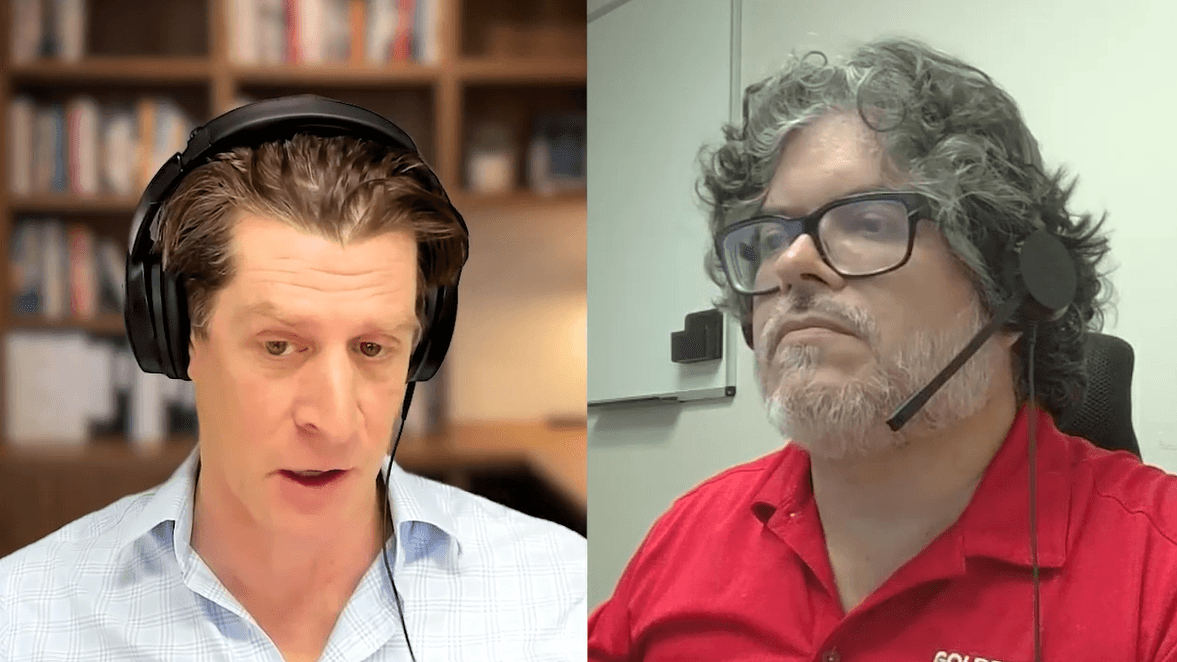
Host: Andy Anderson | Guest: Chuck Fox
You're listening to "The Future of Claims," a show about the changes happening in the world of insurance claims. I'm your host, Andy Anderson. I've spent over a decade at the intersection of insurance and technology as a founder, a CEO, and a podcast host. We're going to sit down with some of the leading minds in claims to hear how they think technology, people, and organizations will transform claims over the next 10 years. Chuck, thank you so much for hopping on the podcast.
For those who don't know you, I'd love if you'd just take a quick minute or two and introduce yourself, your background, the firm that you work for, et cetera. Yeah, for sure, Andy. Thank you so much for having me on the podcast. I'm excited to be here. I am a senior director of client development for ESI.
ESI is an engineering consulting firm. We consult in a whole variety of engineering and scientific disciplines, mostly forensic spaces. So we are helping clients who, where there's a claim, there's a loss involved, and we're helping them understand either what happened, perhaps with an aviation accident, structural failure, a fire and explosion. We have a biomedical engineering team that looks at implants and surgical devices and things like that. As you can imagine, a lot of losses, Andy, are multidisciplinary, and so we bring multidisciplinary teams to help solve our clients' biggest challenges.
No, that's amazing. And maybe let's just start with how did you end up doing this? Before this, what was the path? It's interesting. I think most people end up in this space accidentally.
It's not like you go to college and you get a degree in boring- It's all of insurance. Everyone. No one wakes up and is like, "I want to work in insurance at age seven." Right. Yeah, and I think when you're an engineer studying, you think, "I'm going to design the next really cool hypersonic aircraft or something." You're not thinking about evaluating what goes wrong in aviation. So I'm not an engineer.
I'm actually a molecular biologist, and so in training, I grew up in rural Iowa. My dad was a veterinarian, and so I would, after school, jump in the truck with him and go out and help him treat large animal illnesses, which was- Oh, wow ... really cool growing up. And I thought for sure I was going to be a veterinarian, so I went to Iowa State University and started vet school, and my dad said, "Dude, you were getting A's in biochemistry. Why are you going to vet school?
You should get a doctorate." And so I followed his instructions, and I got a PhD in molecular, cellular, and developmental biology from Iowa State University, went on to postdoc at the University of Michigan with a vision to become a professor somewhere and have my own lab and students, and wouldn't that be really cool? I just loved that experience. And I postdoc'd for four years, decided I really needed a job. The university environment was really, the job environment was tight at that time, and I took a job with a startup with a former, my major professor at Iowa State was part of, and it evolved into a forensic animation firm. At least my role did.
It had some broad-based applications that they were working on that were really exciting. The piece that intrigued me was patent litigation, and so I ended up working in the patent litigation space in fields of molecular biology, working with companies mostly in your neck of the woods in California that were pioneering new methods to sequence human DNA. And that led me to broader and broader roles in this space, and I became a strong believer in visual tools as a way to communicate complex concepts, and that ultimately landed me and our team here at ESI. Yeah. Very fun.
I feel like there was some, you ran your own firm before it- Yeah ... became part of ESI. Yep, exactly. When we formed the forensic animation group, that was inside of a larger firm, and then it spun out in, it was January 2001. Okay.
And became a company called Demonstratives Inc. And a partner and I ran that firm for 14 years before we were acquired by ESI. And so we had a chance to really develop as a team because it's one of those things that's really cool, Andy. None of us, it was such a codependency as this company grew because we had folks that were really good at things that I have no idea how to do. I can't sit down at a keyboard and generate a frame of animation for you.
But some of us became really good visual storytellers, and so we could translate between the legal teams and the insurance folks to the animators, the folks who are writing code to maybe solve some particular data type we needed to consume and get it in and visualize it. And so we had this really cool team where everybody was at the top of their game, and we really evolved these tools to a level that became interesting to companies like an ESI or others out there to have this capability. Yeah. That's incredible. And obviously, we're in this moment where this generation of AI is perhaps reaching a cultural moment of importance or relevancy that maybe AI never has before.
But for those of us who have been in the technological world and also are students of the history of technology, this is not The first time AI is here. It's- Right. Sure ... gone in waves. And so you probably know much better than me, so digital animation like Pixar and the capability to do that with what- We did it.
And Pixar was originally a computer company- Yeah ... founded by a couple of professors at- Yeah ... the University of Utah, and then they got bought by Industrial Light & Magic, which was part, the guy who'd done the "Star Wars"- George Lucas. George Lucas. There you go.
Yep. And then was foundering as a company because the addressable market for high-end- Right ... animation creating computers was like 10 companies and several thousand people, maybe not big enough. Yeah. But then Steve Jobs ends up investing.
Very fun stories about how much Steve was actually involved and how much credit he eventually took for it. I won't go down that route, but people should at some point. Yeah. It's such an interesting to go back to that, Andy. There's some fun stories.
I came into this space, it was 1995 when I joined- Okay ... EAI, which was the larger company that was the startup that became a much larger firm. And there were just some brilliant 3D graphics people there. It was a product of Iowa State University, and their engineering department still has a very powerful 3D graphics human computer interaction component to it. And so that company had just started, and their vision was to take all this CAD data that was being generated in the engineering world that nobody could really look at.
Like if you're Ford Motor Company and you're designing a car, sure, there's people in Germany maybe that are working on the engine or components of the drivetrain, and there's people in Detroit that are working on other components of the car, but you couldn't really bring those things together digitally. You couldn't look at them, or it's too complex. A computer couldn't visualize this. And so this company was really focused on building software that would allow that to happen. At the time, this is pre-"Toy Story." Mm.
The world for me divides into pre- and post-"Toy Story." "Toy Story" was what year? Did you- So "Toy Story" was 1996, I think- Okay ... was "Toy Story," if I'm right. Somebody will fact-check me on this and tell us, but I think it was around 1996. 1995, 1996.
And so the world didn't know anything about 3D animation. Nobody had an inkling. Pixar had made a number of shorts. Yeah. Short films that had been- "The Lamp." "The Lamp." Exactly.
That is the beginning of Pixar movies. Exactly. They had a- '95 is "Toy Story." '95. Okay. Yeah.
"Tin Toy" was one of their famous shorts. If somebody could jump on YouTube and look at it, it's really cute. And it was perfect because it was very mechanical, and the- Right ... toys and things were the perfect thing for 3D animation to do this. And so the world didn't know about it.
We were working in this space, and I remember sitting in an office at this startup firm at EAI with a bunch of these really sophisticated animators watching the trailer for "Toy Story." And it just blew our minds, like Buzz Lightyear stepping on the Matchbox car and going down the track and flying into the air. And I think there were probably half a dozen of us in that room one night, and half of those folks ended up at Pixar, and they went into those fields as programmers. It was really cool. But then the world knew about it, and we always have worked in that space from the scientific and technical side. We haven't done it from the entertainment piece.
It's always been reusing these tools to reconstruct something that actually happened, but we feel real camaraderie with folks in that space, and we have a lot of folks we've worked with over the years that went to that space and used it as a creative tool. Yeah. No, and just a couple of threads that, again, I want to pick up on is one, I live in the heart of Silicon Valley, but- Yep ... I have enough perspective on history to know that the threads that built much of what Silicon Valley gets the most press for actually run through a lot of amazing universities. Yeah.
Stanford. Well, yes, but also, and I was particularly aware of University of Illinois Champaign, but it's fun- Oh, yeah sure ... to hear about Iowa State and that. Another chapter in some of those stories, University of Utah also obviously had huge background there. University of Michigan as well.
Yeah. Some of these engineering places. Yeah. And obviously academia is in a bit of a funk right now for- Mm-hmm ... many reasons.
There's some demographic things happening in terms of just fewer students, and I think unfortunately academia has probably gotten... They were not doing things with enough thinking about efficiency, so like inflation, academic inflation has gotten really high, and things have gotten really expensive. But the things that the investment in academia pays off many, many, many times over, and sometimes you just don't see it. And I think the concerning thing about the state of things now, and things ebb and flow, but those investments we make in academia and some of that basic science that people are frequently critical of, like why are they studying the neuroscience of these insects? Those things pay off maybe 20 years down the road.
We wouldn't have the iPhone if it wasn't for, I don't know how many hundreds of university patents and inventions that went into things like the iPhones, things that we touch every day that we don't, unless you're my age, you don't think twice about having this, but 30 years ago, that would've been space age. And it was research that was happening at some of the universities you mentioned that made that possible. Yeah, like the Ozempic and all those drugs are all- Yeah ... it's from the saliva of the Gila monster, I think, is where they- Yeah ... originally found some of those chemicals.
The Taq polymerase, the protein that drives the reaction that duplicates RNA or DNA, depending on your interest, that we all took the tests during COVID. We all- Mm ... got the swab of our nose, and they put it in a tube, and they told you whether you were COVID positive or not. All that came from a protein that was discovered in a thermostable bacterium in a geyser from a hot springs. Who the heck would fund that research, and how many lives has it saved now?
Well, okay, so you were recreating these incidents. And walk me through, for someone who doesn't do this every day, why do you guys do that? What's the goal of that, and what's the outcome that you sometimes see? Yeah. It's changed over time.
When we were first doing it, it was a tool that allowed us to communicate complex concepts to a juror, someone who maybe is off the street, doesn't really know things about braking distance or lines of sight, or the physics that, say, might be associated with a ground vehicle accident. And so it was a tool where I always felt like I was the person who was sitting down with an expert who was going to opine on a particular event in the courtroom, and I was trying to extract the movie that played in their mind when they were thinking about that accident and put it on a screen so a juror could see it, and they could describe it in a way that was effective. And there's no doubt that these tools are really effective in that way. People say, "Well, I'm a visual learner." We're all visual learners. We all take in most of the information that we consume visually.
And so we initially viewed it as this really powerful teaching aid. In about 2014, '15, we really started to see spatial data that was really robust. We had ways of creating- Mm-hmm ... some three-dimensional data of a scene, but it was pretty rudimentary. And laser scanners came along.
They were available in research environments long before that, but they really became economically viable and started being used in a litigation or a claim context in the 2014, '15 range. Those tools gave us really good three-dimensional information about the environment where an accident happened. And at first, we saw it as, oh, this is a great shortcut for building out this scene for an animation. What we learned was this is a powerful tool for understanding the space in which an accident occurred. And many of the things, if you think about ground vehicle accidents or slip and falls or industrial events, they happen in a confined space, and that space constrains what could have happened.
At that time, many things were unwitnessed. There weren't so many surveillance cameras as there are now. And so there would be an accident where something would be unwitnessed, and we would get a case, and someone would tell us, "Well, this is what happened. This guy stuck his arm in this machine, and the guard wasn't on it, and this happened." And then we'd look at the scans, you say, "There's no way the guy stuck his arm in. He's not tall enough to get his arm in the space they said that they put it." There would just be these physical spatial constraints that would help us start to carve away at what could have happened.
We would use it, we would show images we could render to first responders. They'd say, "No, no, no. It wasn't like that. We found him in this way." Or you could look at the wreckage from something, say, "No way it could have happened that way. It had to be this." And so physically, three-dimensional space started to constrain what we could begin to have opinions about.
And it was really helpful in that regard. Later, we start to see security camera footage. And we used to get it, and people say, "Oh, I've got this security camera footage. Can you do anything with that?" And we're like, "Uh, yeah, probably not. It's horrible.
It's something moving around in a distance. There's very little you can get from that." Now, it's the gold standard. Almost nothing happens on planet Earth that isn't captured by a security camera now. And so cases come in where there's an event, and it's captured by two or three cameras. And while one camera view might have a certain amount of value, it doesn't necessarily give us speeds or physical data.
But when we map that back to the three-dimensional space that I mentioned earlier that we get from laser scanners and things, we can extract very precise data from that and understand much more about an accident sequence. So now it's even less about paring away what we don't know and putting together pieces of data that tells a lot about exactly what happened. And so it's been really exciting to follow this evolution of these tools and have them go from simply a teaching tool to something that really helps us understand the matter in much greater detail. Yeah. And I think so much to unpacking what you said, it's really interesting.
I think on the technological level, I think what's fun to hear about in the story of your career and the history with ESI and its previous iterations is the interplay of different technologies and how- Yeah ... it's not one but several that- Yeah ... And I think as we're at the dawn of this next wave of AI, and it's a wave, and there were previous others. In some ways, the animation capabilities were one of the big previous ones, and honestly, actually, this wave is very heavily dependent on the visual analysis that came out of that one. So they're not- Yeah ...
it's the same story in different form. But I think what's very fun is I think what people may not appreciate is the way that this AI is going to unlock- Mm-hmm ... other things and its ability. Fundamentally, the LLMs, the large language models, are translators and what- Mm-hmm ... they are.
We get very excited about, and what honestly got me excited about this business was the ability for AI to work as a translator to structure this unstructured data that sits in a lot of these cases, and then to be able to do really interesting things with structured data to bring in other data science tools to understand patterns, to see what's happening. Your stories are way sexier with video, and they're 3D and whatnot, but- Yeah. It's an element of it, though, Andy. That's what's so cool is the more data we can consume, the more You throw around this word multidisciplinary. Well, what's that mean?
It means, well, maybe like in an aviation accident, you're going to have piloting experts and people that understand the aerodynamics of airplane, but metallurgists often tell us what happened in an aviation accident. And so there's this multidisciplinary set of engineers that come into it. But in a lot of events, if we really want to understand them, especially in a way that you could maybe prevent them in the future, there's way more disciplines that come in. Perhaps how money moves, how communications happen, all these things that are out there that we just don't maybe know how to map at the moment, but if we could, if we could associate these things and see those patterns and understand how humans interact in a broader system, we really might have a chance to change outcomes in a way that, as opposed to being able to explain, well, this is what happened that caused this tragedy. Here's things that we could alter to avoid that thing in the future, and that's really exciting.
Defense teams are drowning. Tighter deadlines, thinner margins, and the plaintiff firms armed with AI and litigation defense. That's why we built Oraclaim. I'm a former insurance executive. My co-founder is a former litigation defense partner.
We built Oraclaim specifically for the work defense teams actually do inside a fully closed, secure system. The result, faster, more comprehensive work, better outcomes for carriers, increased profitability for firms. Today, Oraclaim is being used by top national insurance defense firms and regional boutique specialists handling workers' comp, trucking, construction defect, med mal, toxic torts, and everything in between. Oraclaim, AI for the defense. Learn more at oraclaim.com.
That's O-R-A-C-L-A-I-M.com. I mean, this is a little departure from what we've been talking about, but I think your firm may work on both sides. My firm almost works exclusively on the defense side with a lot of carriers. And unfortunately, there's this story that the plaintiff side is often telling, which is basically that carriers are in this for monetary reasons, like that they're always looking to take advantage of victims or plaintiffs who are involved in these accidents. And those of us who work on this side realize that for the vast majority of individuals who work here and in the vast majority of cases, that's not the case.
Not universal. There's bad outcomes and bad actors in every industry and in every organization probably. But a lot of it is getting to the truth of what happened. Yeah. And unfortunately, the abuse that is happening, particularly on the plaintiff side, unfortunately colors almost every interaction.
Like the skeptical way that a lot of the defense side has to, and cynical perspective that they have, has been colored by over and over and over again, these interactions where people seem to be taking advantage of the system to some degree. And the ability for data, for technology, for some of these storytelling to uncover and quickly segment the folks that are, this is a tragedy and a situation that insurance was, that is literally why it was invented for, to help the tragic events to be a little less terrible, and particularly from a financial perspective, but also to show perhaps when things are improbable, unlikely, perhaps on the edge of fraudulent. That's really what I get quite excited about. It's obviously a nerdy mission or a nerdy way to look at things, but it is, for me at least, incredibly exciting and interesting. Yeah.
It's interesting, too, Andy, to pull that thread a little bit in the insurance space. Again, the focus that I see these things from are single matters for the most part. Yeah. But what is exciting, I think, about being able to look at large tranches of data are patterns that one might not recognize on the surface that insurance companies, some of these bigger industries have access to. And so a lot of that, we just haven't had the tools to mine it.
We haven't had the ability to go in and look for those patterns. And I think as those start to emerge, that will be really interesting. Yeah, and I think also, I used to work in cybersecurity. Just before this, I was the CEO of a cyber insurance firm. And so that is a world of unintended consequences and unexpected outcomes.
And so I think the work that you do every day is, are you uncovering a lot of those things in with products, with accidents, with individuals, with autos, with any type of machinery, and to understand, okay- Yeah ... how did this go wrong? And as we think about aviation in particular, I think has the best history of studying every single accident and then trying to change things so that they happen less frequently. An incredible history of that. Yep, exactly.
It is probably the model for just about every other industry in terms of really understanding, taking something that's a really high-risk activity and making it very, very safe- Yeah ... through discipline. Have you, in your history, this is a space for you to maybe share some war stories and whatnot. Are there any accidents, not necessarily in aviation, but in any of those that that pattern has played out where what you guys have done has maybe changed or at least informed the building or the recreating of different products or whatnot? Yeah.
I do think the aviation space is a great one to draw on. We have a long history in that space, I think because animation, it really suits the accidents that happen in the aviation space. They're complicated and it bringing together a number of concepts. And in the early days, I mentioned EAI and that startup. The software that that company was developing was adopted by the NTSB in the early days.
And so when you used to see aviation accidents on the nightly news and the animation of what happened, that was created using Viz Lab. And sometimes our team was engaged by the NTSB, in fact, on Flight 800, which was the TWA crash that happened off the East Coast. I think that flight departed JFK, and it exploded. It was a center tank fuel explosion on a 747. It was going from New York to Paris.
Horrible accident. One of our animators actually went in-house. That was such a highly secure... At the time, witnesses said they had seen a missile hit the aircraft, and so there were a variety of security interests around that investigation. We had someone in-house at the NTSB working on that animation.
So that, to work hand-in-hand with the NTSB and then take that into the private space as well and work with clients who want to understand, does our component of this aircraft have an issue? I think that is probably one of the areas where over time you feel like it made a difference. Investigating these accidents and really understanding what happened has refined that industry at some level. Now I'm just curious, what happened? What caused the Flight 800?
Do you remember? So in TWA Flight 800, it was a center fuel tank explosion. There was not a missile that struck the airplane. Yeah. I think the conspiracy theories- Still ...
flew around pretty heavily at that time. In that particular aircraft, the center fuel tank was nearly empty. There was almost no fuel in that tank. They had the fuel loaded in the wing tanks for that flight, and they were going to pump fuel into the center tank during the flight itself. Mm.
The plane was going to be heavy, and so that's a normal configuration. But what happened was, because it was a super hot day, they were running the air conditioning packs on the airplane a lot. The center fuel tank was hot, and the vapor density from the fuel in that tank was high. And I think, if I'm recalling correctly, when the pilots turned on a pump to pump fuel into the center tank, there was a spark- Mm ... in the center tank that caused an explosion.
Wow. And it was catastrophic to the flight. Yeah, immediate. Broke the plane in half. Immediate.
Yeah. Yeah. Wow. In terms to go to one more detail on that one, it might be interesting, the 3D analysis of that one became crucial because if it were struck by a missile, you'd expect a penetration from the outside. There'd be a hole that you could find through that.
And one of the things the NTSB does so well is recover the wreckage, and that aircraft was on the bottom of the ocean, the Atlantic Ocean, off the East Coast of the US. They recovered so much of that aircraft that we could actually model all the pieces, put all the layers back together, and show that there was no penetration from the outside to the fuel tank, that the energy was all going from the inside out, which back then was just a fascinating feat to- Yeah, and the recovery, and again, the number of individuals that are involved. We've talked a lot about what's happened going back maybe to '95, almost 31 years. Yeah. What do you see in what's happening now from a technological perspective?
Where do you see things going? Are there things that are beginning, you can see the early signs of? Yeah, I think definitely. I think the trends that we are seeing is less of the data being generated by us and more of the data being readily available in the world. So I think there are a couple trends in that regard.
Now when we have an accident on a roadway, for example, we go out with laser scanners, and we scan that space ourselves. But you start looking at mapping tools and what's happening on the planet, we're starting to get a pretty high-resolution model of the Earth, and especially in populated places. You can jump in Google Earth and fly around New York City at a pretty high level of detail. And so I think having that data readily available is going to make the effort that goes into understanding an event, one, not only less expensive, but happen more in real time, so you can know far more quickly. So one of the trends we see in litigation is bringing these tools into litigation early in the game often results in earlier resolution of the matter.
Sometimes when you go through this exercise, it becomes fairly obvious what happened. And when that occurs, you can usually resolve a case early in the game, which is probably the biggest savings our clients get from doing this. And I think as the data becomes at your fingertips, as opposed to flying somewhere with a laser scanner and a bag to capture the data, you can know even more quickly and in more automated ways, get a good understanding, an early understanding of what happened. That has a lot of value. I think in cases where going deeply into the detail is really necessary, those are still going to take a lot of effort and a lot of human skill and a lot of inputs.
But there are some cases that are going to resolve with pretty early swipes at data that are going to be really helpful for the industry. Yeah, and I think that's a story that we are thinking and talking a lot about. For background for folks who are listening, maybe this is the first time they've heard us talk. I'm one of the co-founders of Reclaim. We're an AI startup for civil defense attorneys as well as insurance adjusters to help them understand what's going on in a case or a claim.
And the ability for AI to put things together very quickly with great detail, still humans involved. It'd be a long time until, and I think probably never, when humans aren't involved in that process, barring changes in the constitutions of various states and societal expectations. But yeah, to just understand things early is really, really valuable and so beneficial, I think, for everyone involved. Because a case, if it ends up going to court or even going close to court, it's going to drag out for years. Five, seven years could be when you're actually in court.
And so for people who are injured, who are dealing with that That the loss is there, to have earlier resolution, particularly if they're seriously injured. How do you fund those many years until you get there? And not necessarily having as much of the costs of that, even for those of us who work in the system. We sell to attorneys. You are hired by law firms a lot.
That less of the loss goes into the resolution process and more into the actual resolution. I think we would both be, even though it's maybe not self-interestedly beneficial, we'd be excited about. Well, let's talk about if they wanted to find you. Where does ESI particularly shine, if they're thinking about hiring an independent expert? What are the areas that they should try and seek you out for, and maybe what makes you guys different relative to some of your competitors?
I think that's always helpful for people to know and hear. Yeah, for sure. ESI is really a multidisciplinary engineering and scientific firm. And so when you have a complex loss and you're trying to understand what happened from the engineering perspective, from a scientific perspective, ESI is particularly efficient at getting at those answers. We have experts that have served in these fields for a long time, and as Andy, there's an element of intuition that doesn't necessarily give you the answer, but it points you in the right direction early in the game, and I think that's a critical element.
I think that the team-based approach is really important. I think that we work in a field where there's a lot of really good engineers, not just at ESI, at our competitors. It's a friendly environment for the most part that we interact in. We interact with some of the best people in the industry. And so when you have a claim, a loss, something that's important that you understand the answer to, we can help.
And if you want to know more about who we are specifically, our website, www.engsys.com, is a good place to look. You can see profiles of the consultants that work in various fields and learn more about our company. And anybody that has questions, I'm happy to listen to issues, to tell stories, to connect people to the right resources here. Yeah. That's great, and I think I would also flag, I know we've talked about this.
You guys play well with others- Mm-hmm ... and often are very upfront in terms of maybe this is not who- Exactly ... we may be good for part of this or maybe not at all, and we'll point you in the direction of other firms that are better suited, if that makes sense. That's right. Also, I would say- We know the field.
We know who we're with at inspections and things all the time, and- Yeah ... the important thing for us is our clients are getting taken care of. Yeah. It's a small world, and making sure that the clients are well-served over the long term, not necessarily in the short term. I would also say is the folks that I've met from your firm, incredibly personable and good at explaining things, which is obviously as important as the science, because if they're going to be in court, they need to be relatable.
They need to be able to tell stories in a simple way that is understandable. Engineers love figuring things out, and one of the things we like to say around here is, "Well, what, when you've figured it out, you're halfway there." Yeah. Because now you've got to figure out how to teach it to somebody. Yeah. And I think for someone who hasn't encountered the world of independent experts, there's a level of professionalism and that goes with the practice.
Even though you may be hired by one side, there is an expectation, an ethical duty to be impartial, to really- Yeah ... to tell the truth as you see it. Yeah. And I think- Yeah. In this space, I think it's important to understand if you're unfamiliar with consultants that work in this space, there is an element of ethics associated with every matter you touch.
But there's an ethic associated with your career, too, because you can be challenged in courts. There's a challenge called a Daubert challenge, where your expertise can be challenged by the opposing counsel, and to be excluded in a matter because of something that you did improperly is not good for your career. And so a good consultant is also looking out for their career, not just a particular matter. I'm not going to say something in one matter and something else in another, that while that might be lucrative in the short term, it's not good for your career in the long term. So there are some pretty good forces that keep your ethics between the lines.
Yeah. Chuck, really enjoyed this. Such a fun discussion. A lot of different areas that we got to cover. Anything else we should hit on before I let you go?
Thank you, Andy, so much for having me. The one little detail I forgot to share back when you were mentioning Pixar is if you ever get to Ames, Iowa, and visit our shop in Ames, we have a Pixar workstation. Oh, wow. It's a coffee table. That's what it is, but it's a museum piece that we have in that shop.
So we actually did have a Pixar workstation back in the late '80s, early '90s. You're one of the ten or whatever. The cool thing is on the box, because computers were like pieces of furniture then. Yeah, they were big. They were big.
It actually has the Pixar logo, and their logo has stayed true to Pixar. The lamp isn't on it, but it's in the font of Pixar. It's a really cool piece. Well, that's fun. If you find yourself out in my neck of the woods, not quite with a baseball arm, but about a mile from my house is the Computer History Museum in Mountain View, California, which I don't know if I've seen the Pixar machine there, but it would surprise me if one is not there because they've got everything, and it's just an incredible tour through the history of computers, obviously, but artificial intelligence and technology.
They do a docent's tour every day around noon. Very fun. I love it. It's amazing, and there's this incredible, on the wall of that museum, they have a graph of Moore's law, and it basically starts at the bottom, and then it looks like a parabola. But then the most fun part is they're like, well, the end of this graph is actually on the moon because the speed at which compute is improving, and the scary thing, or exciting, depending on how you see it, is AI is actually improving faster than Moore's law.
And particularly because you have improvements in the models, you have improvements in the core GPUs, and then you have improvements in the middle layers as well. So the data analysis that's feeding the models as well. So it's just incredible. And if you come out, well, I'll give you a tour. I know a few decent lunch spots around there as well.
Yeah, we're going to do it. That sounds awesome, Andy. Cool. Chuck, thanks so much. Yeah.
Thank you so much for having me, Andy.