Podcasts
Episode 7: Mindfulness, Emotional Intelligence, and What AI Can't Replace with Claire Parson

The Future of Claims — Episode 7: Claire Parson
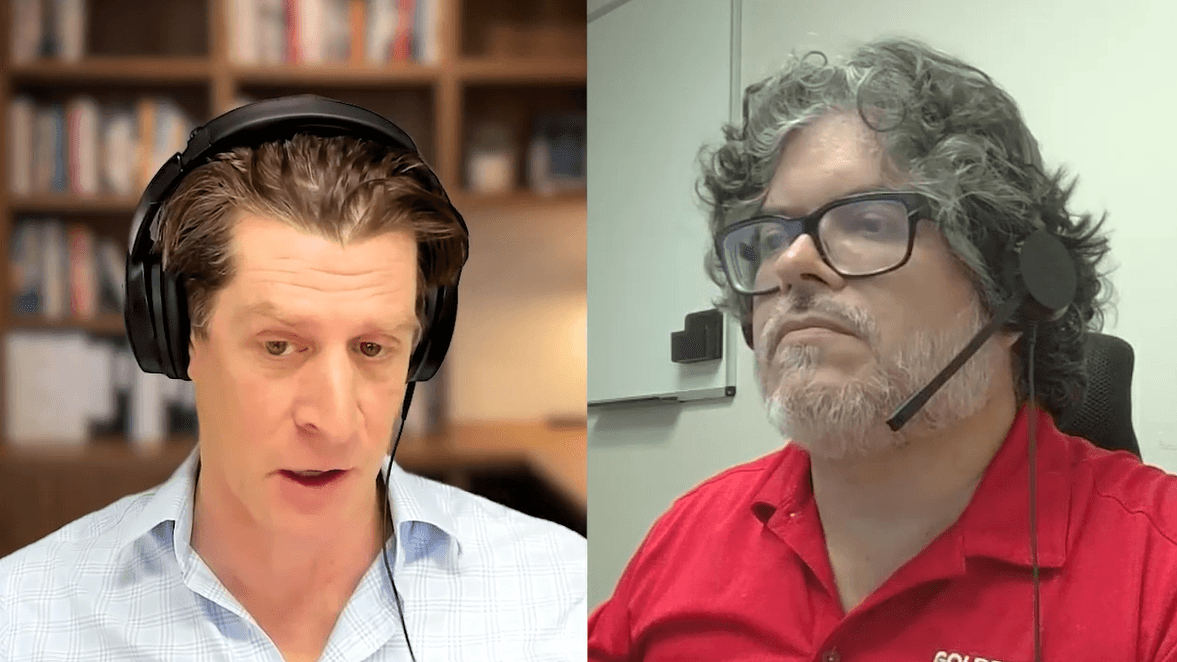
Host: Andrew | Guest: Claire Parson
You're listening to "The Future of Claims," a show about the changes happening in the world of insurance claims. I'm your host, Andy Anderson. I've spent over a decade at the intersection of insurance and technology as a founder, a CEO, and a podcast host. We're going to sit down with some of the leading minds in claims to hear how they think technology, people, and organizations will transform claims over the next 10 years. Well, Claire, I was so looking forward to this conversation after I met you at FTCC.
You've written a bunch, both online and a ton of books, about your journey into mindfulness and how it impacts your work as a defense attorney. But for those who don't know you, I'd love if you just start and give the one, two-minute background on yourself. Yeah. So I'm an attorney at a law firm in Kentucky and Ohio, actually now in Tennessee too, called Bricker & Gray and Wyatt. We're AM Law 200, have about 300 or so attorneys, just merged recently.
And I do mostly school law, so I represent educational institutions. We have a huge school law practice from K through 12, all the way through post-secondary. And I also do some employment law and also litigation, which I've done historically throughout my practice. I've been at the firm about two years now, and it's going great. Along the way, I also started meditating about more than a decade ago, and it made such a huge improvement in my life that I got obsessed with figuring out why it helped me.
And that led me to start speaking and writing about it, also to get a lot of training to be able to teach it myself. And it's been just a great journey. Also growing out of the meditation practice was just a lot of writing. I realized a lot of my thoughts were actually ideas, and I just started writing them down, getting them out there, using LinkedIn, starting the blog, and then writing some books, and it's been a really fun experience. Yeah.
It's amazing. I've had my own mindfulness journey, and we can talk about that, but I write a decent amount and certainly been picking it up this year, and that's such an interesting insight that, yeah, a lot of the things that are rolling around in my head, it would be nice to maybe putting them down and getting them into the world would get them out of my head and they would stop bugging me. Obviously, the podcast is "The Future of Claims," and so one of the things I think, and I wrote a long piece, actually, I published this morning the first version of the newsletter that goes with "The Future of Claims" around how I think there's going to be this symbiotic relationship between human intelligence and artificial intelligence going forward, and the potential benefits for just doing better work because of that. And one of the key things and where humans are particularly strong and AI really struggles, and I think that's when I look at how that symbiotic relationship's going to work, it's you look where is one side strong and the other weak, and the other side's strong and the other weak, that's where symbiosis really makes sense. Emotional intelligence is one of those areas where humans can be particularly strong, and AI, from everything I've seen, really, really struggles understanding what emotions people are presenting and how different tonation, body language, all of those things.
Just to kick it off, how you think about your own mindfulness journey, this getting in touch with the thoughts in your head, your emotions, how you see that rolling forward as you think about what lawyers need to do and if that emotional intelligence is particularly valuable. So I think that a lot of times when lawyers talk about emotional intelligence, I think what they're really going for is emotional control, and they really are really wanting that regulation aspect. That nervous system regulation term keeps getting batted around on the internet right now. It's very popular. And it's an important thing, but I do think that lawyers and frankly, a lot of people on the internet, a lot of influencers, are over-emphasizing the regulation aspect.
I think that they are talking about it in a way as if it means you can rise above your emotions and control them and make them go away so they don't inconvenience you. Mm-hmm. And that is not what mindfulness practice is about, unfortunately. What mindfulness practice really is about is understanding that your emotions have an intelligence to them. They actually do have a wisdom to them.
They can give you good information and important messages. The reality is, though, that those messages are often not ones we want to hear, and they come at times that we don't want to hear them. So one of the things that I have learned about emotional intelligence is that you can't reason with emotions so much. You can't make them go away. You can't force them to the side.
You do have to acknowledge them. They, in some ways, are like children. If you have kids, if you have a hungry kid, you're going to have a noisy kid. If you have a tired kid or a hot kid or any discomfort, they've got to be tended to and cared for, and emotions are like that. But when you do learn to care for them and tend to them, they can be just like your kids, and they can blow your mind, and they can open your eyes, and they can show you a part of life that is really, really important to see.
So one of the reasons I got into mindfulness is that I have had anxiety for most of my life. I still have it. And it used to be that anytime I got afraid of something, it was like a warning sign. It was like a, "You shall not enter. You cannot proceed.
Everything is doom and failure, and you will be alone and destitute, and everything will go wrong, and it's just the end." It's always how I felt for a lot of my life, and that's a terrible thing to have as a lawyer because you're always dealing with stuff that's scary. You're always dealing with risk and adversity and things that are confusing and don't make sense, and problems that cannot be easily put into a category, let alone solved. And so what I have learned over the years is the object is not to make my anxiety go away. The object is to not let my anxiety control my life, and to keep my wits about me in the face of that fear, and honestly learn how to treat my fear with some respect and intelligence. So now when fear arises for me, I recognize it really in the body first.
I notice what it feels like in my body. And if you're a practitioner of mindfulness, what you start to realize is that your emotions land in certain places. You get to be a connoisseur about the different types of anxiety you have. And so you notice it, you feel it, you sit with it, you care for it, you take what messages it gives you. Now, when I have fear arise for me, it tells me to drill down on a fact.
It tells me to dig in closer. It tells me to connect with my team or my client more deeply so that I'm not missing important information, but otherwise I have the skills to proceed and move forward. And so when I talk about emotional intelligence, that's what I'm really talking about, and I think that's what AI can't always tell us and it can't provide for us. It can help go through some written work. It can help us analyze some things.
It doesn't often and can't really give us so much advice. It can give us some strategies and things to potentially use and ideas, but it really can't give us that peace of mind. And truly, what we get in terms of peace of mind is from each other. And so if there's anything I hope people understand is that when we talk about mindfulness and we talk about emotional intelligence, none of it is talking about doing everything on your own. Instead, that should be more cueing you that you need to be supported by a team, working with the team, asking for help, and really have a good relationship with your clients, and that's what is really essential.
Such an interesting answer and makes me think of a bunch of different things. When I was thinking about emotional intelligence, it wasn't that inward sense of control or of intelligence. It's really, and perhaps the term is really EQ that people talk about, like they have capabilities. IQ is, I think it's intelligence quotient, and then I think EQ is emotional quotient. So that ability to understand what is going on with another individual.
I think your answer's really interesting, and I actually want to dig in on some of those things because I think in some ways the pathway to additional EQ is self-study. I've done some study in the Buddhist practice and area, and there's that constant effort to understand the self in order to help others. The ultimate goal of Buddhism is really to actualize yourself, to be enlightened, but as part of that, the more you improve yourself, you become more present, the more you can be present and helpful for others. So I'd love to dig in on that and maybe talk about how you see EQ playing into this and the need for that in the daily work that you do on the defense side. Yeah.
So in terms of responding and dealing with other people, I think part of what I was really answering is, it's really hard to do that as a practical matter if you're lost in your own experience. And the reality is that many of us are. I think that it goes without saying. In part, it's because we are so lost in thoughts. We so are absorbed in thoughts.
That's a cultural thing. It's a cultural thing that's prevalent in the legal profession, but it does color what you're doing. The other thing is that emotions inherently color what you're doing and how you are perceiving things. And so it's pretty impossible to-- If you're someone who deals with anxiety on a regular basis or who is chronically stressed, you're not going to be seeing this other person clearly, and there's a high chance that you are going to be responding and reacting to their emotions rather than be fully objective and stable in the way that many lawyers assume that we are. And so I think I was answering more about inner experience because that is so foundational.
But part of what we do have to remember, there's an idea, I think, where lawyers often do have a perception that we have to present in a certain way to deal with other people effectively. And I do have a lot of cases where I have to take a more stern and boundary-setting approach with people because it's essential to navigate situations with my clients. But one of the things that you do learn if you pay attention, and I think the best lawyers I know are ones that can notice things about other people, and even if they don't overtly call them out or talk to the person about what they notice in terms of their emotional experience, they know how to navigate it, and they know how to craft communication or deal with people in a way that speaks to all those varied emotions that do come up. So it's something that's really essential and helpful, and it can be as fundamental as determining what communication style somebody... where you get the most from them, whether it's by phone or email or having an in-person meeting or something like that.
But yeah, those things are absolutely essential. I do think where a lot of lawyers miss is That we skimp on the inner experience. I think sometimes we don't want to go there. I think sometimes we tell ourselves we don't have time, or we tell ourselves it matters what we do externally more, and so we just don't prioritize it. From my experience, it was not until I prioritized understanding my own inner experience that I was able to even have the capacity to have appropriate empathy that wasn't manipulated easily by external circumstances.
And so I just really do recommend that. I love that answer. It was really fun and interesting, and I think there's a couple threads that I want to pull on that because I think one is having worked with some mindfulness teachers really around emotions in particular, how often the emotion that you're feeling is due to some other cause. And I think in particular, the one that always strikes me is anger. And anger is fundamentally often a sign of a feeling of unfairness.
And I think particularly in the world of litigation defense and the crisis that we're seeing around nuclear verdicts and social inflation, I think understanding that is helpful. And it's helpful particularly for the defense side because I think what is driving a lot of these massive cases is a sense of unfairness from the people who are bringing the claims often. They've been involved in an accident, and they feel that it's unfair, and they're looking for a way to balance that to get justice. And then I think the plaintiff side has really weaponized that feeling of unfairness, and their goal via the reptile theory is really to drive anger at what are seen as social inequality, corporate malfeasance, all of these things that feel like they are, again, they want to make people angry. I'd love for your thinking on that.
Have you gone there? What's your sense of that, unpacking some of the emotions that are driving some of the outcomes here? I think maybe unfairness is maybe the surface-level aspect of anger. My experience with anger is that it actually, I've written about this and I've done some seminars about this too. My experience with anger is generally that it actually is hiding other emotions.
Anger is often a protective and energizing emotion that arises. Often there's a judgment about some rule or boundary violation that is the basis. So often it does start with a very logical, rational thought that may not always be premised on 100% true facts, but that judgment is there, and then it arises. And really the function of anger, our culture has a weird ambivalent relationship with anger. Some people are allowed to be angry, but some people aren't.
And lawyers definitely are allowed to use anger, but we aren't really allowed to truly feel it because it's out of control, and we do have to be real cautious about that. It can be an emotion that is very unhealthy to experience if you do it chronically. But one thing about meditation is that we don't put rules on emotions. No emotions are bad. It's that certain emotions you should be cautious about because they can be unhealthy.
And because once anger arises, it is difficult to control. That's the reality of it. So what I have found with anger is really that it's not only about that unfairness or that boundary violation. What's often below it and underneath it is usually something much more vulnerable. It's something very different.
And I would say that if we are experiencing juries that are often talking about unfairness or worried about unfairness, what I'm thinking is that really is a lot of people on juries who feel helpless and like they don't have control and that they aren't empowered. And the reality, I think, in our economy and with our political system right now, with the disputes we all have and the lack of ability that people may perceive in terms of their ability to control their futures, I can understand that that's justified. I can understand at least where people are having that thought process. And so defense lawyers, I think when we go into trial, I think defense lawyers often try to use the same approaches. And I think that's often correct.
But one way we can try to combat that is by helping to empower jurors and remind them of their power in the situation and their ability to think critically about things. We also, I think, many times defense lawyers try to present as the voice of reason. And sometimes that works to calm things down, and sometimes it can disconnect you further from the juror. So we do have a tight line to walk. But often when I am experiencing anger, nine times out of 10 when I'm experiencing anger, for me, because I'm an anxiety person, it's really fear.
It's really fear that's under it. And it's really sadness in many cases. Sadness that I don't have certain control, sadness that I've lost something. And so the way that I can really take care of that is actually to take care of the sadness and fear. And so lawyers that can help explain those things to jurors and connect with those needs, I think would have an advantage going into hearing or going into trial and having a jury consider that.
But it's really tough to do. It truly is. It really is a challenge to do, especially if you've got a technical case, or you've got a case with a bunch of documents, or you have people in suits from a corporation that are your witnesses In comparison to injured plaintiff who may be a parent or somebody who shows up looking like a normal citizen, it's a challenge to walk that line. I think it's possible to do so, but yeah, it can be really, really complicated and difficult. Yeah, and I think it's interesting as I think about that symbiotic relationship and where things are going with lawyers' adoption of AI.
I think the folks who actually are in touch have that high EQ, that is what is going to be particularly valuable because a lot of the things that previously distinguished attorneys from as really good at their job, encyclopedic knowledge of a particular area, the ability to just grind through tedium of a case to investigate, to be a bloodhound. Those things are becoming more easily done with the augmentation of technology. So you will still have a spectrum of quality of individuals like you do in every area, but the thing that is going to differentiate ones from another, it seems increasingly, EQ is one of those places, and the ability to take the time to understand. So I'd love your, and I know you've written some about how you view the impact of AI in this in some of both of the positives and the benefits of it. I'd love for you to give your perspective.
So I am not an expert on AI. I actually had waited to really dig in with some of it, in part because frankly what ChatGPT and some of the others offered, I already had. So the writing stuff was never very much of interest to me from those products. I found the writing to be creepy, to say the least, and it just uses the same patterns over and over again, and it was not something I really did use. Other than making some funny images for LinkedIn or a presentation or something, I really didn't use it until my firm got some of the enterprise tools.
And so I have used CoCounsel for some legal research. I've used Copilot more recently for some writing projects, and that mostly at this point has been to save me from typing a lot of extra things, but it's been effective. What I think, though, and what I'm curious to see what happens with AI is, I don't think that lawyers who have many years of experience in a subject matter, in a subject, are really great because they have an encyclopedic knowledge of the law. I think it's that they have a judgment and a discernment that has been refined from having navigated a series of disputes over and over. They have this encyclopedic knowledge of the law because they've done that so many times.
That's a byproduct, but that is not the main skill. And for instance, I have navigated so many school law disputes that I know the regs under IDEA and some of the other statutes almost by heart, but I always look at them every single time when I've got a dispute. Because what I'm looking at is what do these regs mean in this situation right now? How can I use this process to the maximum benefit for my client? And because I have done that so many times, I have developed judgment, but I've also developed courage that we can navigate this situation and get through it okay.
And I don't know. I'm not saying I don't know the tech well enough to know whether judgment is something that artificial intelligence can ever develop, but I'm not seeing it yet. And actually, what I get concerned about from the legal research standpoint is not experienced attorneys using it. I get concerned about inexperienced attorneys using AI and not realizing what they're missing. CoCounsel's a great product.
I really do like it. It has made searching on Westlaw so much more helpful because Westlaw, for instance, is so big that you have to go through six or seven clicks just to get to the database you want, and then you have to come up with the right search. So that process has been a lot easier, but where I have seen it miss is on subtle issues, not big issues. It's not hallucinated cases. It's not made-up ideas.
It's that sometimes there's an obscure line of attorney general decisions on an open records question, and they just miss that. They get distracted by a case, and then they miss the more recent stuff, and that's where younger attorneys who don't have that judgment could miss it. And so that's what I'm interested to see, and I'm not really an advocate for AI replacing that. I'm not sure if I was a client, I would have a lot of peace of mind with using AI and trying to replace a lawyer's judgment on that. But I do think that judgment and experience piece is one of the bigger things that lawyers really do offer.
And then that courage aspect of going through that situation with the client and being able to say, "This is how we're going to do it. This is the murky path we have, but here's why I'm going to propose this pathway specifically over this other one." And yeah, and that's part of what we offer to clients, and I do think that relates to emotional intelligence, obviously. But that's what I'm seeing, and that's where I'm not seeing AI pick up the slack. What I can say from a practice standpoint is I am seeing a ton of pro se litigants, pro se complainants use AI very unskillfully, and it is creating a lot of burdens. And so the more tools, and frankly, I think the legal process is going to need a procedure in the future to weed some of that out in a fair way because it's going to be very burdensome, very fast on courts, administrative agencies, public entities, and private sector as well.
Defense teams are drowning Tighter deadlines, thinner margins, and the plaintiff firms armed with AI in litigation defense. That's why we built Oraclaim. I'm a former insurance executive. My co-founder is a former litigation defense partner. We built Oraclaim specifically for the work defense teams actually do inside a fully closed, secure system.
The result? Faster, more comprehensive work, better outcomes for carriers, increased profitability for firms. Today, Oraclaim is being used by top national insurance defense firms and regional boutique specialists handling workers' comp, trucking, construction defect, med mal, toxic torts, and everything in between. Oraclaim, AI for the defense. Learn more at oraclaim.com.
That's O-R-A-C-L-A-I-M.com. Interesting. Yeah, I think we keep circling back to some of the same themes. That's emotional intelligence, EQ, beneficial for self, but also for the management of clients, the relationships, understanding where they are, and yeah, I think that I would agree. I think legal research is a particularly challenging area for AI.
I think it's getting better, but I think the best analogy that I've heard is AI will get you on the dartboard, but continuously throwing darts at it is not necessarily going to get you closer to the bullseye. But particularly, getting on the dartboard is very, very useful, and that's massively time savings. I think that's true in legal research, but it's also in the facts of the case. I'm the co-founder of an AI startup, and what we do is we give the key folks on the defense side all the things that they need to do to then start making the judgment calls. The, okay, here's-- And again, I'm going to use my experience.
I'm going to understand some of the things that are between the lines. What is this client? Where are they? How are they going to play in front of a jury? What are some of the things that maybe aren't as easy to understand in terms of why their case is stronger or weaker?
Some of those things. We may get there where AI can start to, and quantification of that may happen. But I think that point in terms of the other place where I think humans are particularly good relative to AI, or maybe just different, is that nonlinear thinking. And you talked about the use of those emotions as another form of intelligence. I've often heard of it as wide-ranging perception.
Humans can be quite good at that, but they often are doing it somewhat on a subconscious level. They're seeing patterns that they recognize, and their emotions pick it up before their frontal cortex logical brain does. What else? How about some of the emotions, because I think there's quite a bit of fear and concern around the adding of technology. I've heard that quite a bit around job replacement, impacts on revenue.
What's your sense of how folks could and should navigate what is a period of disruption? And again, I want to stress that I'm not an AI expert. I just actually attended a women's legal conference last week. I spoke at it, and Cat Moon from Vanderbilt University was there, and I asked her a question. I told her, I said, "Cat, my daughter's a teenager, and she's an artist, and if I tell her I so much as use co-counsel to search for a legal issue, she gets mad at me because she tells me how terrible AI is for the environment and how it's going to destroy so many jobs, including those in art, and it's going to destroy even human appreciation of art." And I have been honest with my daughter that I think that there's going to be a lot of problems associated with AI, and I wish there was some more regulation and supervision.
But at the same time, I've told her, you can't bury your head in the sand. And what Cat Moon said is that if people do have ethical concerns about AI, if they do have concerns about where it is going, what she said is those people need to know about it. They need to understand it. And so she told me, and I've already said this to my daughter too, but she used the term conscientious objector. And so one thing I think that we are losing in the United States in the midst of a lot of our fighting right now is that we're not really grappling with issues.
We're talking on opposite sides of an issue, either with the people who agree with us, or we're yelling against each other and really making points on opposing viewpoints and not really talking to each other. The whole American experiment that we have is that in our legal system is premised on the idea that we're going to have an educated populace that discusses things and debates, though we don't have that. And I think on AI, we don't have enough of that. That's why I think there should be more regulation. We do have companies that are offering products, and the market often in the United States decides things.
But to be able to have a discussion, we have to have educated individuals. We have to have people who know the products and know how it could work. And so what I've told my daughter is, you need to understand things more to understand what you're even afraid of. You need to understand things more to understand. And I told her, I was like, never has it happened in human history where something is bad and it's 100% bad.
A lot of times, difficult things happen, and then they can lead to good results. And so I do see some potential benefits already from using AI. I see some concern areas. Many of those concern areas are outside of my control, but the best thing I can do right now is to understand it myself, to see what benefits it offers me, to see how I can better serve my clients, and to monitor how I can ethically use it and to notice how it is affecting me. How is it affecting...
Because everything we do, me using Westlaw all these years in my law practice has shaped me as a lawyer in a way that using books and other services in the past didn't shape my parents as lawyers. And so I think we should be paying attention. I think we should not bury our head in the sand. We should be willing to experiment and innovate, and if we're not, I think we're going to struggle quite a lot. But yeah, I don't know.
I'm not sure if I'm saying-- I'm probably saying a lot of what you don't want me to say. No, no. Again, there are no wrong emotions. There are no wrong opinions here. And I think you're grappling with it.
It's fun how you're grappling with it in your own work, but also in your own family and intergenerationally. And I'm a history of technology person, that's what I've studied in school, and it's been a hobby of mine, and I live probably a mile from the Computer History Museum, which is a pretty fun place to go and to see, one, how long this artificial intelligence has been around in its various formats, and also how consistent these fears about technology have been. I think one of the things that people struggle with the most is change. That is probably the thing that is emotionally most challenging to deal with, and it's even bad outcomes, if people know them, they can get comfortable with it. Like once they know it, but it's that uncertainty that's particularly difficult.
There's an amazing article, and I'll post it in the show notes, and you can grab it for your daughter, which is this amazing writer basically looked at the fears around job replacement going back well over 100 years. And it's amazing because it's headlines and magazine covers going back into the 1800s about how with every new technological arrival, there's going to be this, the death of human work and all of the things that come with it. And whether that was the cotton gin, the tractors, to assembly lines, to all of these others, to PCs, to the internet, and now this latest. And so far, it hasn't happened. I'm not a futurist, so I can't say I know for certain, but it certainly, the emotional response has been the same consistently, and how it's played out has also consistently been not the way that emotion would predict.
There's also a great study, it's a couple MIT guys who basically 80% of the jobs that people do didn't exist, I believe, 40 years ago. And humans are very good. Loss aversion is one of our strongest emotions, and so we're very good at understanding what we may lose. It's obviously much more challenging to understand something that it doesn't exist anymore. That takes creativity at a scale that some have that capability, I think.
I wouldn't put myself in that category, and maybe most. But how do you think, don't bury your head in the sand. Do you have any particular advice for folks how they might sit with it or get comfortable with that change? How do you deal with when there's uncertainty? You got to use it.
I've tried to talk to my daughter about this, and I've tried to, because I lived, I was in college, I think. I was in high school to college when Google came out, and I lived through Y2K, and the mania around that. Like, is the world going to end with Y2K? And then the internet, and then the dot-com bubble and all that. And I've tried to tell my daughter, "Look, we've had these concerns before, and they haven't actualized." But with this, you don't know that that's going to be the same.
But at the same time, I'm a millennial. I don't think I've ever read an instruction manual for any technological device I've ever purchased. We don't do that. We don't read instruction manuals. We just start playing with it and using it.
And so that's just part of the way I process. I think millennials and younger do that, and I think some people who are older than that struggle with that a little bit more. And so when the tools became available for me to use, I just got them. I started using them. I started at least trying them out and seeing what they could do.
I played around and did stupid stuff. Like sometimes I would download the report from Westlaw CoCounsel, and then I put it into Copilot and see what other abomination I could create. And I've done it with fun stuff. So business development things. Things that, okay, if you're afraid to do it for any billable client work, try it with your business development and see where it can save you time there.
And honestly, it's a low-stakes way to play with it. And also, if you put in a prompt and you create a thing and it is terrible and doesn't work, throw it out. It's not like you have to show it to anybody. But I would probably say start with some of your business development stuff. Start with some of your non-billable stuff and see if it solves any headaches there.
You can develop the skill of learning to use it. Microsoft and some of the other applications too, they have training programs to learn about these things. Many of the larger firms are going to be pushing out training for their staff. Go to those things. At least learn about it and see what's out there and if it benefits you.
With my practice, because my practice is largely school law, and a lot of my practice is general counsel, it's actually not litigation, a lot of what I do doesn't fit squarely into the parameters of what many of the products are really suited towards. Like for instance, CoCounsel, even Westlaw is subdivided between transactional and litigation. It doesn't have an advice at counsel tab. Maybe someday it will. So a lot of times when I'm looking at AI and I'm doing some of the trainings, looking at some of the products, I'm really looking like, what can this do for me, and how could I use this?
And I sometimes have to be creative about it. But I have actually used it more for business development at this point than anything. Where recently, I had a paper requirement for a presentation I'm going to do, and I used AI to get started on generating the paper from my PowerPoint. And that could be a time savings, and it can help you create something that you might not have thought of yourself. And so there's different ways to play with it.
But I would probably say, and maybe this is a mindfulness teacher answer. When I teach people mindfulness, I don't tell them to get super serious about it. I don't tell them to be super rigid about it. I don't say, "Try as hard as you can every single second." And do you know why? Because if you do that, you're going to miss so much, and you are not going to have an open mind.
You're going to hate your experience, and you will never do it again. So if you can do anything with AI Start with playing with it instead of being-- Don't be afraid of it, don't judge it, but play and see what you can do, and see what's possible instead of just acting like it's not for you and you know that it's wrong or bad. And if you play and try and you don't like it, that's fine, but at least you'll have that information, at least you'll understand. Yeah, and I think what's particularly interesting and fun about AI is that its ability to democratize access to information in a way, again, the way Google did when it arrived. Suddenly, so many of these esoteric areas were available for anyone at the click of a-- the input of a search query.
But those of us who've been doing that for 20-plus years, we realize that then there's often a lot of work to get from there to really the understanding of what's going on, and obviously places like Wikipedia made that much easier. You can get to synopses, but now you can get the answer that AI can give you so much quicker, and that has ramifications for the folks who are creating some of the source material and whatnot. That's incredible. In so many of these areas where I think the general public has struggled, and I think some of those of us who are privileged to work and to be well-educated, to have resources and whatnot, it's hard for us to sometimes appreciate how valuable just getting high-quality information easily is. And I think about folks who don't have access to medicine and good quality doctors.
They don't have access to good legal advice. I did some interviews with folks who are doing access to justice, and it's 90-plus percent of folks who can't afford a lawyer who might need it. And so the ability to do that, and I fully appreciate some of the issues around pro se plaintiffs and garbage citations and all of those things, but just giving them an ability to understand what's going on, I think is really, really valuable. And I encourage your daughter, I encourage anyone who's thinking about this, to really start. You've got to see both the problems but also the potential benefits.
And I think some of the near-term problems, I think will be ameliorated. I think some of the issues around energy usage are more of a near-term problem because I think I'm seeing what the models are doing in terms of their improvement just in energy efficiency. In under a year, you're seeing 10X reductions in energy efficiency, and I think some of those things will get quite a bit better, and then obviously the use of alternative energy sources as well. Actually, I've done some solar stuff, and what's beautiful about AI is a lot of the loads will come during the day, which is exactly when solar is available, and there's not actually-- That's great that sunlight and usage match, because fundamentally that's going to be, I think, a main energy source. Well, we've talked about a ton of stuff, and I know we're reaching the end of the hour.
Any last thoughts you'd have for folks as they navigate this transition, and where can they find you and some of the work that you've been doing? Yeah. Sometimes when I'm asked about problems, or I deal with problems in my practice or another colleague points to that, I'm always like, "That's why I do what I do." So I think that I know AI-specific things are really prevalent right now, and I'm not an expert on those things, so don't take any of my advice on AI necessarily. But if you've got the fear about AI, if you have worries about what we're going to do next and how it's going to face your law firm and how you're going to manage it in your law firm or in your organization, that's where these practices really matter. Mindfulness practices are there for life.
Going back to the Buddhist teachings, we have secular versions now, but they're all fundamentally the same, and they really are about dealing with the fundamental thing that nothing lasts, that everything changes. And so if there is a time for people to consider mindfulness practices, I think it's now. It's always the best time to do it, and there are accessible ways to learn it. I am a teacher who does teach this stuff. I have a blog, Brilliant Legal Mind.
I have books out there to help make it a little bit easier and quicker for lawyers to learn so they don't feel so alone. Happy to talk to anybody about it, and find me on LinkedIn too as well if you want to connect there. But I know that it's a scary thing, and I do not have tons of answers for those fears. I think you, Andy, have made me feel a little bit better because you don't seem to be as scared as some of the other folks I've talked to, and maybe that's because you know more about it. But yeah, I think learning how to manage that fear and take care of yourself, it's going to put you in the best position to deal with whatever problems we have to deal with going forward.
Yeah. We have a lot of conflicts, disputes, problems right now, and what helps me stay steady is knowing that I've got to do the best for my clients and my family, and so I got to take really good care of myself in the process. Yeah. No, the boogeyman under the bed is always scarier when the lights are off, but if you turn on the lights and look under, it's often not quite as scary. Well, Claire, thank you so much for your time.
This is great. We'll make sure we put links to everything where folks can find you and look forward to maybe join in for one of your sessions that you're teaching and hopefully seeing you at some future DCC events or others. So thanks so much. Yep. Thanks for having me.